
A Summer in Farsi: 5 Effective Strategies to Strengthen Your Child's Language Skills
Summer vacation is a golden opportunity to prevent Farsi language loss and turn learning into a family adventure. These strategies go beyond the obvious, generic advice.
Written by: Mahroo Mahdavi
Number of Views: 471
Reading time: 5 min

Introduction
For many Persian-speaking families living abroad whose one of the biggest concerns is their children's gradual loss of Persian language skills, Summer offers a unique opportunity to strengthen your child's connection to their mother tongue and cultural heritage. This article introduces five creative, practical, and culturally meaningful strategies to make learning Persian an enjoyable and rewarding experience for bilingual children.
5 Effective Ways to Strengthen Persian Skills in Bilingual Children
1. Start a Summer Project in Persian
Project-based learning transforms language from a "school subject" into a tool for creativity and self-expression.
For example, encourage your child to:
Create an illustrated summer journal.
Produce a short Persian news report.
Choose a topic such as "Our Summer Garden," "Our Weekend Trip," or even "Today's Biggest Event." Assign roles like reporter, camera operator, and interviewee. Encourage your child to write a short script in Persian and present it on camera. This activity develops public speaking, descriptive vocabulary, and storytelling skills in a fun and modern way.
Make a booklet about their favorite animals or planets.
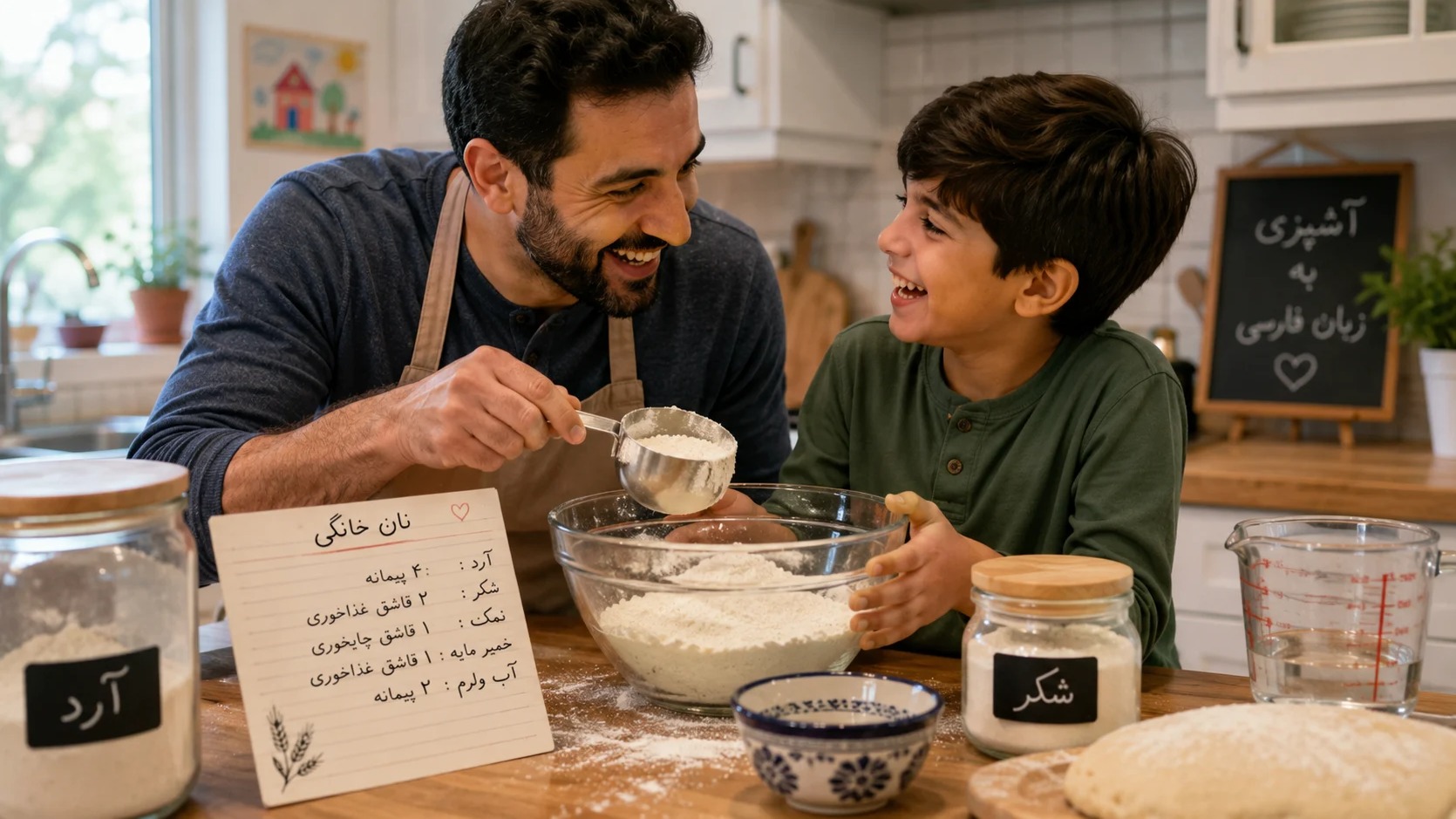
Create a Family Persian Cookbook.
This delicious project involves the whole family. Ask your child to collect favorite recipes from grandparents or find them online. Together, make a list of ingredients in Persian, write the cooking steps (even using simple sentences), and speak only Persian while preparing the meal. This activity not only expands food-related vocabulary and verb usage but also creates a meaningful cultural connection.
Prepare a short presentation about a trip or a favorite hobby.
Through activities like these, children naturally search for new vocabulary, build sentences, and talk about their own ideas—all essential skills for developing fluency in Persian.
2. Make Persian the Language of Everyday Experiences
Many parents ask their children to speak Persian only during study time. As a result, children begin to associate Persian with "homework" rather than communication.
A more effective approach is to dedicate a few hours each week to "Persian in Everyday Life." For example:
Cook together using Persian recipes.
Play board games while speaking only Persian.
Play "I Spy" and other descriptive games in Persian.
In the car, while waiting in line at the store, or during a walk, play I Spy. Ask your child to describe an object using Persian words for color, size, and shape.
For example:
"I spy with my little eye something that is round and red."
This simple game quickly builds descriptive vocabulary while improving listening comprehension.
Set up a pretend shopping game at home.
Share family memories or plan the weekend in Persian.
Use a "Persian Command Chain" for household activities.
Give everyday instructions exclusively in Persian, such as:
"Please put your book on the table."
or
"Close the door."
Begin with simple commands and gradually make them more challenging. You can also switch roles and let your child give instructions to you. This provides authentic practice in understanding and using imperative verbs in real-life situations.
When children use Persian in authentic daily contexts, they naturally absorb sentence structures without relying on memorization.
3. Replace Passive Reading with Collaborative Storytelling
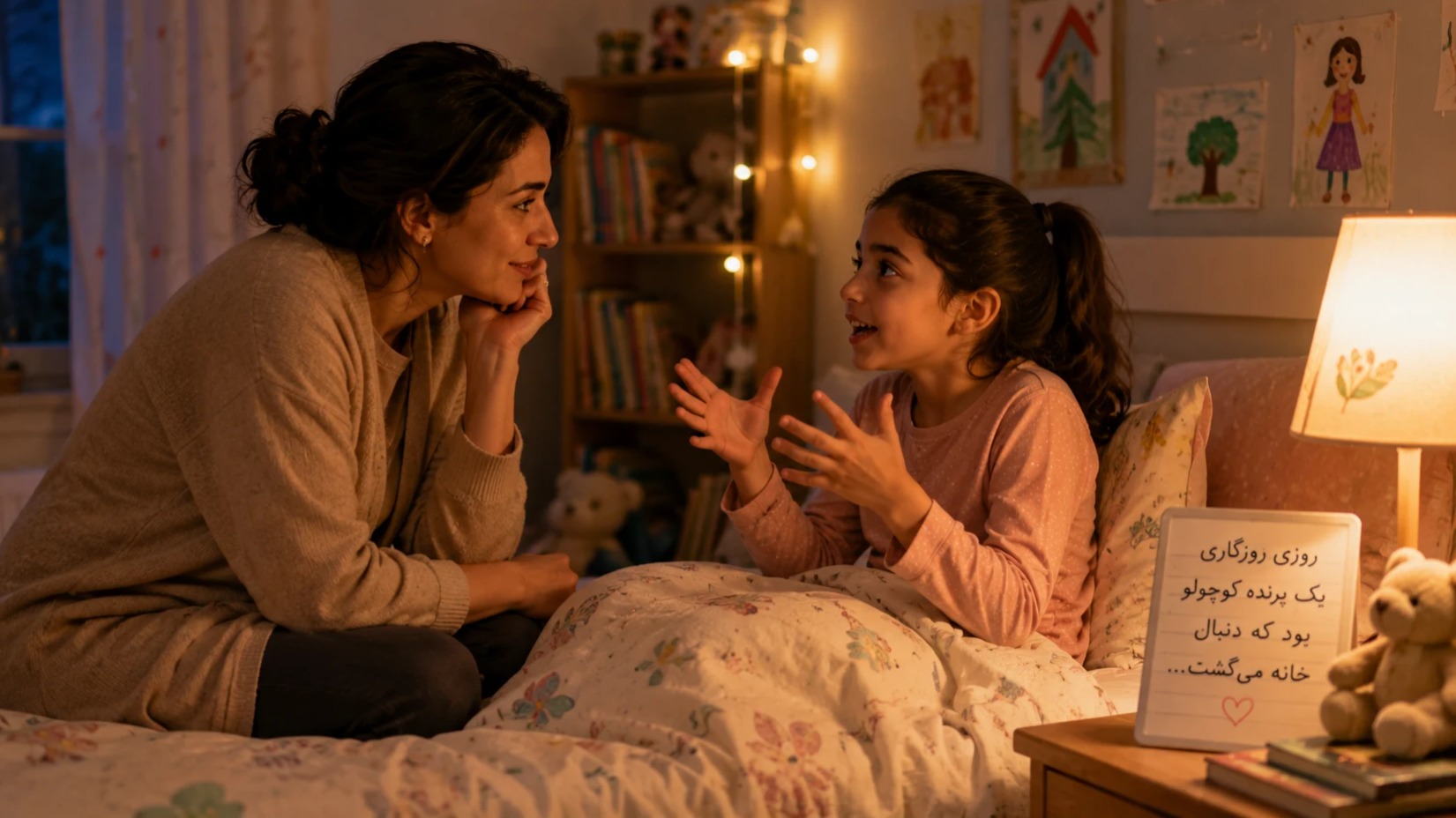
Reading books is valuable, but if a child only listens, they have limited opportunities to practice speaking. Instead, turn storytelling into an interactive activity. For example, ask your child to:
Create a new ending for the story.
Add a new character.
Write the dialogue between the characters.
Act out the story as a short play.
This approach strengthens vocabulary, sentence-building skills, creativity, and self-confidence at the same time.
4. Use Online Persian Learning with a Consistent Routine
Sometimes parents do not have enough time to design language activities, or children benefit from interacting with a teacher and other Persian-speaking peers. In these situations, a structured online Persian program can make learning more focused and consistent.
Choose interactive Persian digital content
Look for Persian podcasts, audiobooks, or educational apps that require active participation, such as those with quizzes, follow-along activities, or speaking prompts. These tools encourage independent learning and expose children to a wider range of vocabulary and accents.
Join online Persian classes
If you are looking for a structured summer program that keeps your child engaged with Persian, platforms such as Darsoon can be a helpful option.
Darsoon is a trusted online Persian-learning platform designed specifically for Persian-speaking children around the world. Its interactive classes, use of games and stories, focus on conversation skills, and emphasis on active participation make the learning process both engaging and effective.
One advantage of Darsoon is the opportunity to attend a free introductory session, allowing parents and children to become familiar with the classroom environment, teaching style, and course levels before enrolling.
5. Create a Real Purpose for Using Persian
Children are far more motivated when they know the language will be used for real communication.
For example, encourage your child to:
Record a voice message for their grandparents each week.
Create a short video in Persian about a favorite hobby.
Introduce a book they have read to family members.
Host a family storytelling contest.
Having a real audience encourages children to speak more carefully and gradually builds confidence in using Persian naturally and independently.
To discover the best Persian language learning centers and resources for second-generation children in Canada visit Darsoon.
How Can You Keep Persian Alive Through Culture at Home?
Language and culture are deeply connected. Cultural activities transform Persian from merely a communication tool into a meaningful part of your child’s identity.
Persian Music, Dance, and Art
Listen to Persian children’s songs, explain the lyrics, and dance together. Talk about Iranian art forms such as miniature painting or calligraphy in Persian. You can even try simple Persian-inspired crafts using instructions in Persian. These activities create a strong emotional connection to the language and turn learning into a multi-sensory experience.
Celebrate Iranian Traditions and Festivals
You do not need to wait for a major holiday like Nowruz. Festivals such as Tirgan, Mehregan, and Yalda Night can become wonderful learning opportunities. Discuss their meaning in Persian, prepare a related dish, tell the stories behind the celebration, or join an online workshop together as a family.
These cultural moments help children see Persian not just as a language to study, but as a living part of their heritage.
Frequently Asked Questions
My child resists speaking Persian. What should I do?
Reduce the pressure and focus on making the experience enjoyable. Start with activities they genuinely like, such as playing games, cooking, or storytelling. Praise every small effort they make, and create a supportive, low-stress environment where they feel comfortable experimenting with the language without fear of making mistakes.
Is online Persian learning effective for children?
Yes. When classes are interactive, age-appropriate, and include engaging, participatory activities, online learning can be just as effective as in-person instruction for developing language skills. This is especially valuable for families living outside of Iran, where access to Persian-speaking communities and teachers may be limited.
Is summer a good time to learn Persian?
Absolutely. Without the pressure of regular schoolwork, children have more time and mental space to practice Persian through games, creative projects, and hands-on activities. Summer provides an ideal environment for developing language skills in a relaxed and enjoyable way.
Final Thoughts
Helping your child strengthen their Persian during the summer is a marathon, not a sprint. By combining family projects, everyday conversations, storytelling, smart online resources, and meaningful cultural experiences, you can transform language learning into an enjoyable adventure.
The most important ingredient is consistency. Small, regular efforts are far more effective than long, irregular study sessions. Celebrate every step of your child's journey, no matter how small, and remember that you are giving them a priceless gift—a lasting connection to their language, culture, roots, and identity.
If you'd like to keep your child engaged with Persian throughout the summer in a fun and structured environment, Darsoon offers interactive online Persian classes designed specifically for bilingual Persian-speaking children around the world. With experienced teachers, engaging lessons, and a free introductory session, it's an excellent way to help children build confidence while staying connected to their heritage.