
7 Clear Signs Your Child Needs Math Help
Recognizing the early signs that your child is struggling with math is the first step toward rebuilding their confidence and setting them up for academic success.
Written by: Mahroo Mahdavi
Number of Views: 366
Reading time: 6 min

Mathematics can be a challenging subject for many children, and as a parent, it is natural to wonder whether your child is simply going through a difficult period or genuinely needs additional support. Recognizing the signs that your child needs help with math early on is essential for their long-term success and confidence.
Ignoring these signs can lead to bigger problems in the future, from falling behind in class to developing a strong dislike of the subject. In this article, we’ll explore seven common signs that your child may benefit from targeted math support, along with insights into what to look for and why it matters.
7 Signs Your Child Needs Help with Math
They take a very long time to complete their math homework
They get similar questions right one time and wrong the next
They become anxious quickly when they see word problems
They constantly say, “I’m not good at math”
Old difficulties reappear when a new topic begins
Their performance is much worse on tests than in class
They wait for an adult’s help to solve every question
Let’s take a closer look at these 7 signs.
1. They Take a Very Long Time to Complete Their Math Homework
One of the first signs is that homework takes an unusually long time to complete.
Of course, a difficult exercise or a large amount of homework can naturally take longer. What you should pay attention to is whether this happens repeatedly.
For example, if your child:
spends a very long time on a few simple questions;
repeatedly asks you to explain the same question;
constantly switches between questions;
doesn’t know where to start when beginning their homework;
or takes several times longer than expected to complete a typical assignment,
the problem may not simply be a lack of practice.
Sometimes, a student has not fully understood a basic concept, which makes new topics more difficult for them.
In this situation, adding more practice is not always the best solution. First, you need to identify exactly which part is causing difficulty.
2. They Get Similar Questions Right One Time and Wrong the Next
This happens to many students.
Your child may correctly solve one type of problem, but when the same concept is presented with different numbers or in a different format, they may no longer be able to solve it.
This can indicate that instead of truly understanding the concept, the student has memorized the method used to solve one specific example.
For example, they may know which steps to follow to solve a particular type of equation, but if the question changes slightly, they may not know what to do.
In this situation, rather than solving dozens of similar questions, it is better to make the practice more varied:
Conceptual questions
Multi-step problems
Questions presented in different formats
Real-life application problems
Questions that can be solved in more than one way
The goal is for students to understand why they choose a particular method, rather than simply knowing how to repeat it.
3. They Become Anxious Quickly When They See Word Problems
For some students, the calculations themselves are not the main problem; turning a word problem into a mathematical problem is.
Your child may be good at calculations, but when a question is several lines long, they may not know:
What exactly is the question asking?
Which information is important?
Which number should they use?
What operation should they perform?
Do they need one step or several steps?
This becomes even more important in higher grades because math problems are usually more than just a simple calculation.
An online math teacher can help students learn how to break a problem into smaller parts and work through it step by step before starting the calculations.

4. They Constantly Say, “I’m Not Good at Math”
This statement should not be dismissed too quickly.
If a child or teenager repeatedly says:
“I’m not good at math.”
“I’ll never understand math.”
“Math is too hard.”
“I’m just not made for math.”
the issue may not be limited to one subject; their confidence in their ability to learn math may be declining.
In this situation, putting more pressure on them usually does not help much. Instead, the learning experience should allow the student to:
start at an appropriate level;
experience small successes;
review mistakes without fear;
ask questions;
and gradually move on to more challenging problems.
Sometimes, a good teacher can completely change a student’s perspective on math simply by changing the way a concept is explained.
5. Old Difficulties Reappear When a New Topic Begins
Unlike some other subjects, math has a chain-like structure. Many new topics depend on concepts that students learned previously.
That is why a student may suddenly struggle when they start a new topic, even though the underlying problem may actually come from several months or even years earlier.
For example:
Difficulty with fractions can affect algebra.
Weakness in basic calculations can make solving equations harder.
Difficulty understanding ratios and proportions can appear in application problems.
A weak understanding of variables can make more advanced topics difficult to learn.
In these situations, instead of focusing only on the current topic, it is better to take a step back and see which prerequisite skill has not yet been fully mastered.
6. Their Performance Is Much Worse on Tests Than in Class
Sometimes, a student can solve problems at home or in class but does not perform well on tests.
If this happens repeatedly, it is worth taking a closer look.
Some possible reasons include:
Poor time management during tests
Difficulty reading and analyzing questions
Repeated calculation mistakes
Difficulty choosing the right method
Stress while solving problems
Not practicing with a variety of questions
In this situation, simply reviewing the textbook again may not be enough.
The student should sometimes practice under test-like conditions, followed by an analysis of exactly which stage of the process is causing them to lose points.
This type of review can provide much more useful information than a single test score.
7. They Wait for an Adult’s Help to Solve Every Question
Asking parents for help is completely normal. However, if your child waits for you to provide the solution for almost every question, it is worth paying closer attention.
The goal of learning math is not for students to always be able to solve problems with someone else’s help. Gradually, they should be able to make their own decisions:
Where should I start?
What do I know?
What don’t I know?
What method might work?
If the answer is wrong, which part of my work should I check?
Sometimes, parents unintentionally solve a large part of the problem for their child because they are trying to help. Instead of giving the answer, it is better to ask smaller guiding questions so the student can find the path on their own.
What Can Parents Do When They Notice These Signs?
If you have noticed some of these signs in your child, don’t panic. There are many effective and supportive steps you can take.
Talk to your child: Talk to your child with empathy and curiosity rather than judgment. Ask how they feel about math and which parts they find most difficult.
Talk to their teacher: Teachers have a unique perspective on your child’s performance in class and can provide valuable guidance.
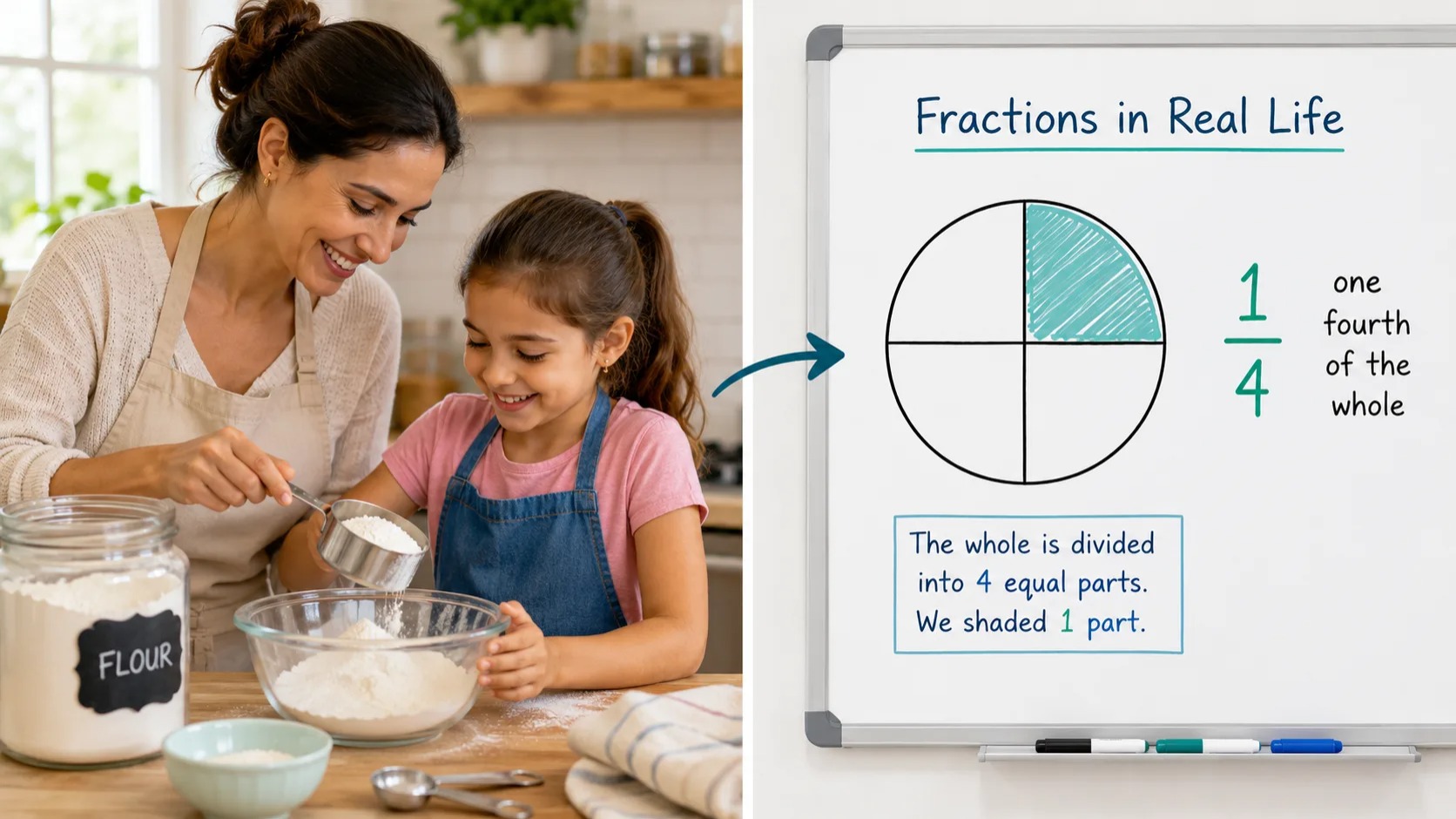
Make math positive at home: Present math as a fun puzzle or a useful tool. Incorporate math into everyday life through games, cooking, or budgeting.
Focus on the process, not just the answer: Praise their effort, persistence, and smart strategies.
Consider targeted support: Sometimes, a little extra help is all that is needed. Exploring different learning programs and resources, or working with a private tutor, can help increase your child’s confidence.
Do These Signs Mean Your Child Definitely Needs a Private Tutor?
Not necessarily.
Seeing one of these signs on its own does not mean there is a serious problem. All students may occasionally struggle with a particular topic.
However, if several signs appear at the same time and continue for several weeks or months, it is worth looking into the situation more carefully.
Before choosing additional classes, try to identify exactly what the problem is:
A specific topic?
Basic skills?
Problem-solving?
Learning pace?
Study habits?
Or confidence?
Then you can decide whether the student needs more practice, parental support, new learning resources, or an online private math tutor.
Getting Help Earlier Does Not Always Mean There Is a Bigger Problem
One common mistake is to wait until a student’s grades drop significantly before considering additional support.
Sometimes, just a few sessions of targeted instruction can address a small difficulty before it develops into several bigger problems.
This is especially true in math. Identifying a small weakness in a basic concept and working specifically on that area can make learning future topics much easier.
Online Math Education at Darsoon
Darsoon is an online math education platform where students can take private lessons with a math teacher who matches their level and individual needs. The goal is to help each student find the right learning path and make steady progress in math with the support of a teacher.
Frequently Asked Questions
How Can I Tell Whether My Child Has Math Anxiety or Is Simply Bored?
Math anxiety usually appears as significant emotional distress, such as crying or frustration, physical symptoms such as stomachaches, or strong self-doubt. Boredom, on the other hand, is usually seen as a lack of attention, daydreaming, or finishing assignments quickly but carelessly without significant emotional distress.
Is It Normal for a Child to Struggle with Word Problems Even If They Are Good at Basic Calculations?
Yes, this is very common. Word problems require reading comprehension, critical thinking, and the ability to translate language into mathematical equations. A child may be excellent at memorized calculations while still needing targeted support to develop higher-level problem-solving skills.