
What Makes the Best Piano Teacher for Your Child?
Choosing the right piano teacher for a child goes far beyond playing skills. This guide helps you identify the characteristics of an inspiring and effective instructor.
Written by: Mahroo Mahdavi
Number of Views: 232
Reading time: 5 min
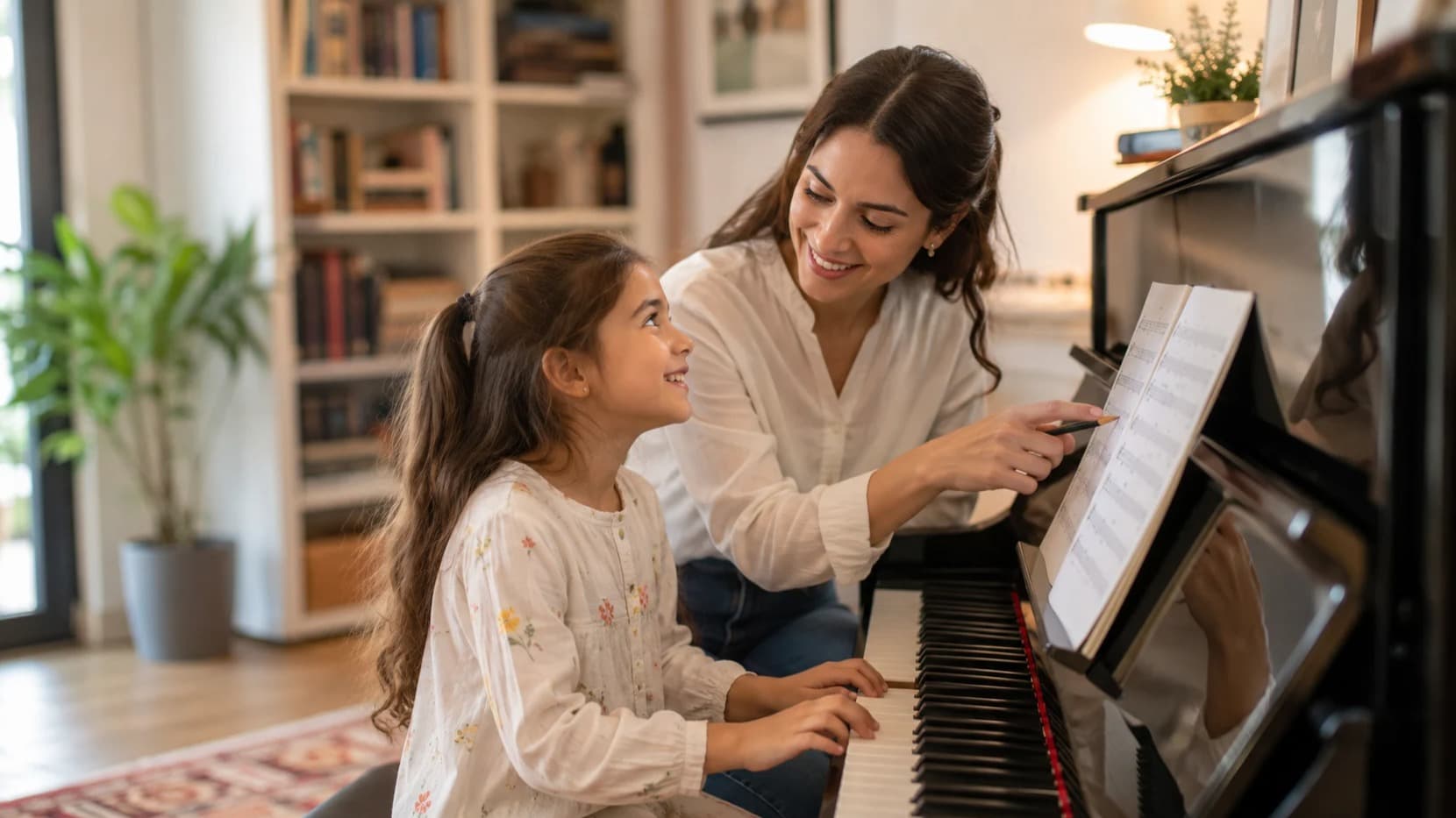
What Are the Qualities of the Best Piano Teacher for a Child?
Choosing a piano teacher for your child is not simply about finding someone who plays the piano well. A highly skilled pianist may not necessarily be the right choice for teaching a child. Teaching piano to children requires another important skill: understanding how children learn and being able to turn music into an enjoyable and easy-to-understand experience.
Especially in private piano lessons, the relationship that develops between the child and the teacher can have a significant impact on the child's motivation to continue learning. But how can we tell whether a private piano teacher is truly the right fit for our child?
1. The Best Piano Teacher Is Not Necessarily the Strictest One
One common belief about music education is that the stricter the teacher, the more regularly the child will practice, and the better musician they will eventually become. However, for children, too much pressure does not always lead to greater progress.
A good teacher should be able to find a balance between structure and flexibility. For example, if a child is having trouble concentrating on a particular day, it may be better to include a different activity in the lesson rather than spend the entire session repeating the same exercise.
A child-friendly teacher:
Sees making mistakes as a natural part of learning.
Focuses on the child's individual progress instead of comparing them with other students.
Knows when to insist on technique and when to change the teaching approach.
Does not turn practice into a boring or punishing task.
2. It's Not Just About «What» You Teach; «How» You Teach Matters More
Two teachers may teach exactly the same piece of music, but the results can be completely different for the child.
Imagine that a child is struggling with one part of a piece. One teacher might ask them to repeat the same section over and over again. Another teacher might break the problem into smaller parts, change the rhythm, or first turn it into a practice game.
In private piano lessons, this flexibility is especially important because the teacher is not limited to following one fixed teaching plan. They can adjust their approach based on how the child responds.
An Important Question for Parents
Instead of simply asking, “How many years have you been teaching piano?” ask:
“If my child doesn't understand an exercise or doesn't enjoy it, how would you usually change your teaching approach?”
The teacher's answer may tell you more about their suitability for your child than the number of years they have been teaching.
3. Does the Teacher Encourage the Child to Listen to Music?
Learning piano should not be limited to reading notes and playing pieces.
One valuable quality of a good teacher is the ability to encourage children to listen, explore, and think about music. For example, the teacher might talk about the differences between the sounds of two pieces, ask the child which part of a piece they like most, or invite them to describe how a particular piece of music makes them feel.
This helps children gradually understand that music is more than just a collection of notes.
In fact, the goal of the best piano teacher should not simply be to help a child play a piece “correctly.” It should also be to help them understand why and how music is created.
4. A Good Teacher Knows When to Give Children Choices
Should children always play the pieces their teacher chooses for them?
Not necessarily.
Of course, learning the fundamentals and practicing pieces appropriate for the child's level are essential. However, giving children some freedom to choose can increase their motivation. For example, a teacher might offer several pieces that match the student's level and let the child choose one.
Even small choices can make a difference:
Choosing between two pieces.
Deciding the order of practice activities.
Selecting a favorite piece to learn.
Creating a simple rhythm or short melody.
This freedom gives children a sense of participation. They are not simply expected to follow every instruction their teacher gives them.
5. The Best Piano Teacher Pays Attention to the Child's Personality
Not all children learn in the same way.
Some children may learn more quickly by looking at sheet music, while others may progress more easily through listening and repetition. Some children enjoy performing for others, while others prefer to build confidence in a quiet and comfortable environment first.
For this reason, an online piano teacher or an in-person teacher should be able to adapt their communication style to the student.
If a child starts feeling after a few lessons that “I'm not good at piano,” the problem may not be their musical ability. It may be that the teaching approach does not match the way they learn.
6. A Warning Sign: When the Only Goal Is Perfect Performance
Sometimes parents assume that if their child can play increasingly difficult pieces, the lessons must be successful. However, musical progress should not be measured only by how challenging the pieces become.
If a child:
Avoids practicing.
Becomes afraid of making mistakes.
Constantly compares themselves with others.
Or plays the piano only to please their parents,
it may be time to reconsider the teaching approach.
A good teacher should pay attention not only to technical progress but also to the child's confidence, independence, and enjoyment of music.
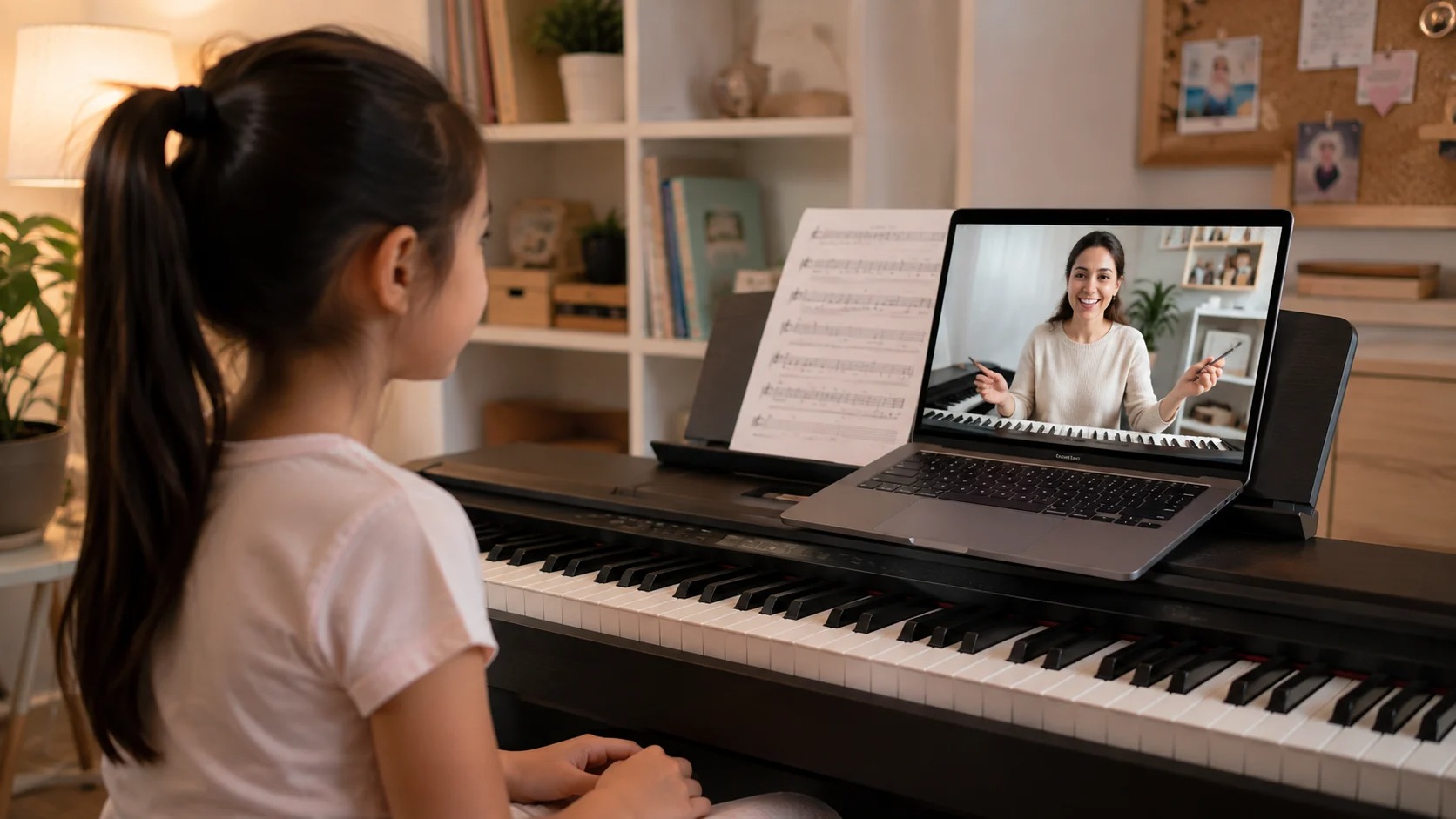
7. An Online Teacher Can Also Be a Great Choice—If the Lessons Are Truly Interactive
For families with busy schedules or those looking for an online piano teacher, private online lessons can be a suitable option. However, being online is not an advantage on its own; the quality of the learning experience matters more.
In a good online lesson, a child should not simply sit in front of a screen and follow the teacher's instructions. The teacher should interact with the child regularly, carefully observe their playing, explain mistakes, and adjust lesson activities according to the child's level of concentration.
You may also find Darsoon's guide to finding the best online piano teacher
8. An Introductory meeting Is More Than Just an Introduction; It's an Opportunity to Evaluate the Teacher
Before making a final decision, an introductory or trial meeting can provide parents with valuable information. A free introductory meeting is not just an opportunity to meet the teacher; parents can use this session to understand the teacher's teaching methods, flexibility, and compatibility with their child's personality. Instead of focusing only on experience and piano-playing skills, it is better to ask questions that reveal how the teacher responds to real classroom situations.
What is your approach to teaching piano to children, and how do you adapt your lessons to a child's age and personality?
If a child becomes tired of practicing or loses interest in a piece, how do you encourage them to continue learning?
What does the practice schedule at home look like, and how do you evaluate the child's progress?
In online lessons, how do you make sure the child is learning effectively and actively participating in class?
Darsoon, an online education platform, also offers parents the opportunity to make a well-informed decision when choosing the best piano teacher by providing a free introductory session before they select a teacher and class.
In the End, Who Is the Best Piano Teacher?
The best piano teacher for a child is not necessarily the most famous or the strictest one. The right teacher is someone who can balance technical instruction, the child's interests, and their individual needs.
When choosing a private piano teacher, it is better to look beyond experience and qualifications alone and consider this question:
“Can this teacher help my child learn to play the piano while also enjoying the learning process?”
If the answer is yes, the learning journey can become much more than memorizing a few pieces of music. Over time, the child can learn to practice independently, identify their own mistakes, and develop a more personal relationship with music.
At Darsoon, families can access private online piano lessons with experienced teachers, allowing them to choose classes that fit their child's needs and schedule. Before getting started, you can meet the teacher in a free introductory session and see whether their teaching style is a good match for your child.
Frequently Asked Questions (FAQ)
At what age can my child start learning piano?
Most experts suggest that ages 5 to 7 are a good time to start, as children have developed the necessary concentration and motor coordination. However, each child's interest and readiness are different, and an introductory session with a teacher can help you make this decision.
How can I encourage my child to practice daily?
Make practice a short, consistent part of the daily routine. Instead of focusing on duration, concentrate on small, achievable goals. Acknowledge their progress and provide a positive, supportive environment at home.
Are online piano lessons effective for children?
Yes, online classes with an experienced teacher who uses interactive tools can be very effective. They offer greater flexibility and, with the right instructor, can be just as efficient as in-person lessons.