
10 Best Chess Openings for Beginners (for White and Black)
When you or your child are just starting out in chess, the biggest question is usually: what should my first move be? The good news is you don't need to memorize dozens of opening lines. One or two simple openings per color, and the logic behind them, are enough. This article walks through 5 openings for White and 5 defenses for Black, with a diagram for each.
Written by: Mahroo Mahdavi
Number of Views: 58
Reading time: 5 min

What Is a Chess Opening and Why Does It Matter?
The first handful of moves in a game is called the opening. During this phase, both players try to bring their pieces into play and claim good squares. A good opening won't win the game for you, but it means you carry on from a healthy, understandable position rather than one that fell apart in the first ten moves.
Three Principles Every Opening Shares
Control the center: e4, d4, e5 and d5 are the most important squares on the board. A piece in the center watches more squares.
Develop your pieces quickly: Get your knights and bishops off the back rank early, and don't move the same piece twice without a reason.
Keep your king safe: Castle somewhere around move 8 to 10 so your king gets out of the middle of the board.
How to Read the Moves
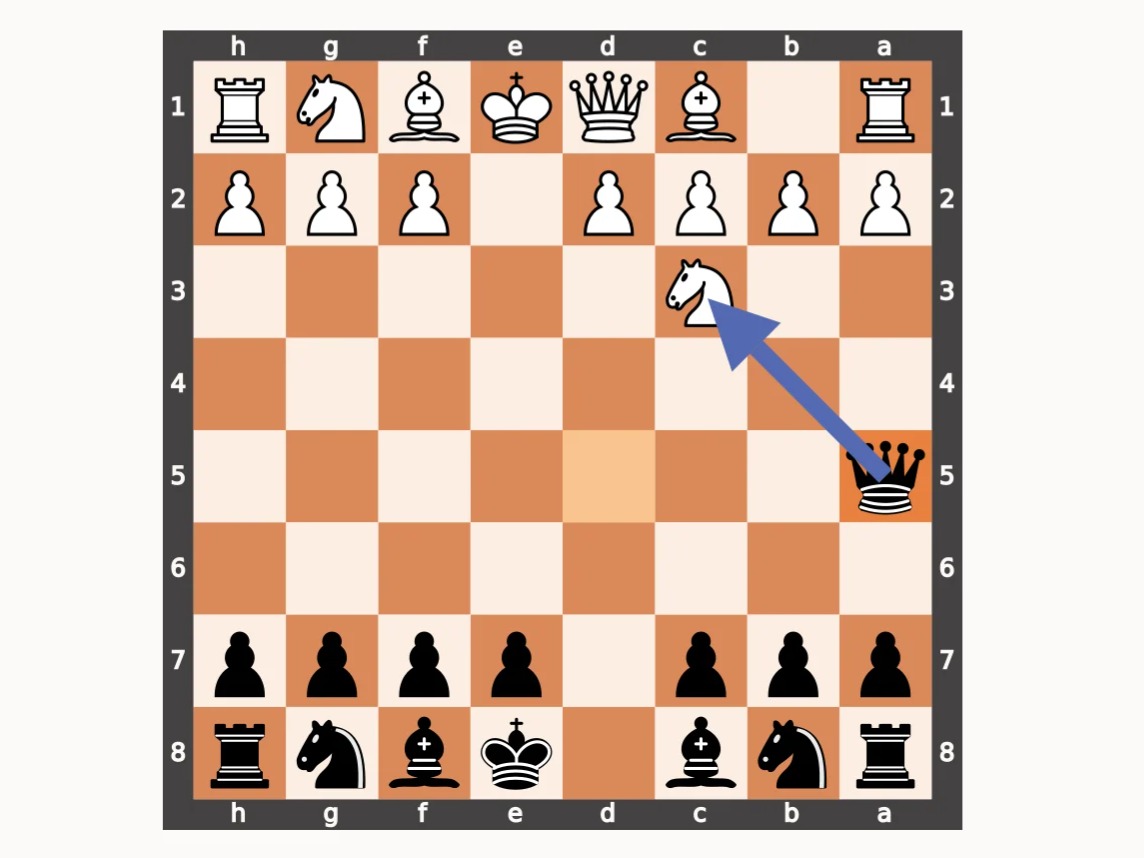
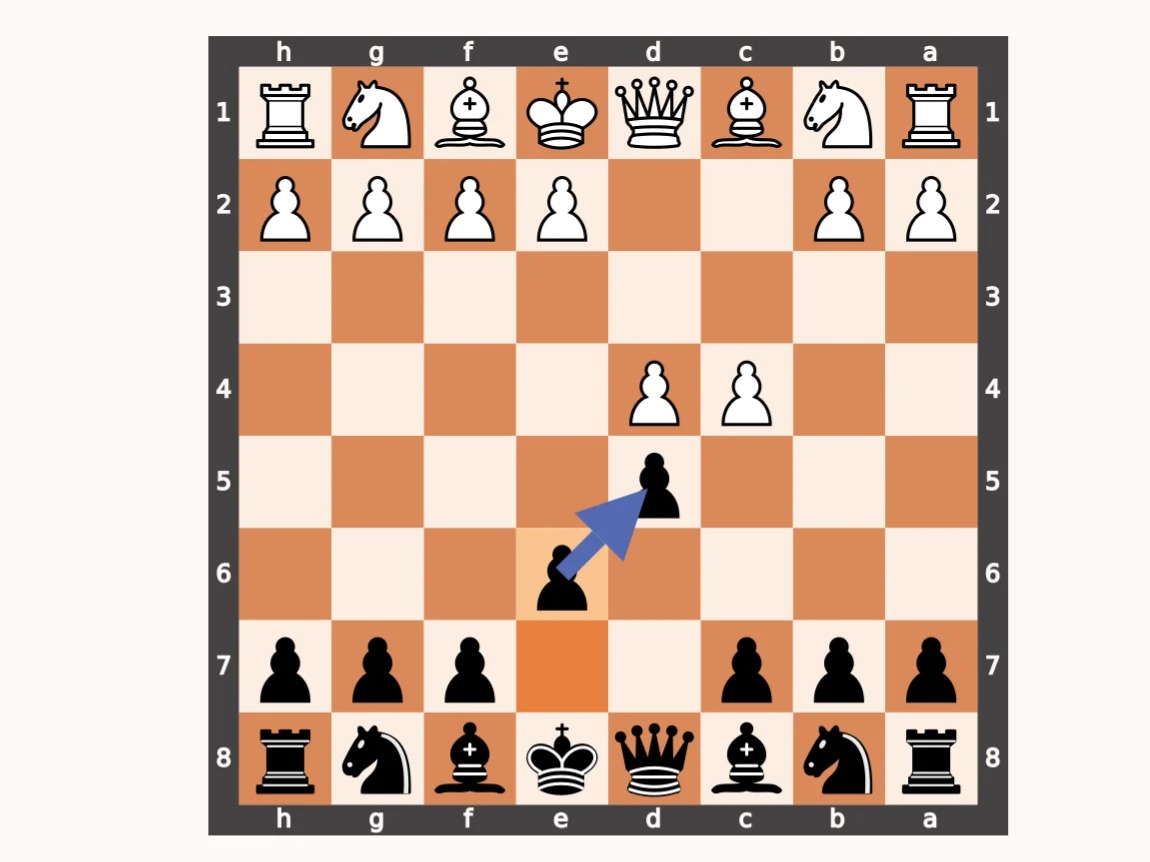
This article uses standard algebraic notation: a capital letter stands for the piece (N knight, B bishop, Q queen, R rook, K king), and no letter means a pawn moved. So Nf3 means the knight goes to f3, and e4 means a pawn goes to e4. In the diagrams, the blue arrow shows the main idea of the opening and the highlighted orange squares show the last move. The diagrams in the Black section are drawn from Black's side of the board.
5 Chess Openings for White
White moves first, so White has the initiative. These five openings are the simplest ways to make use of that head start.
1. The Italian Game
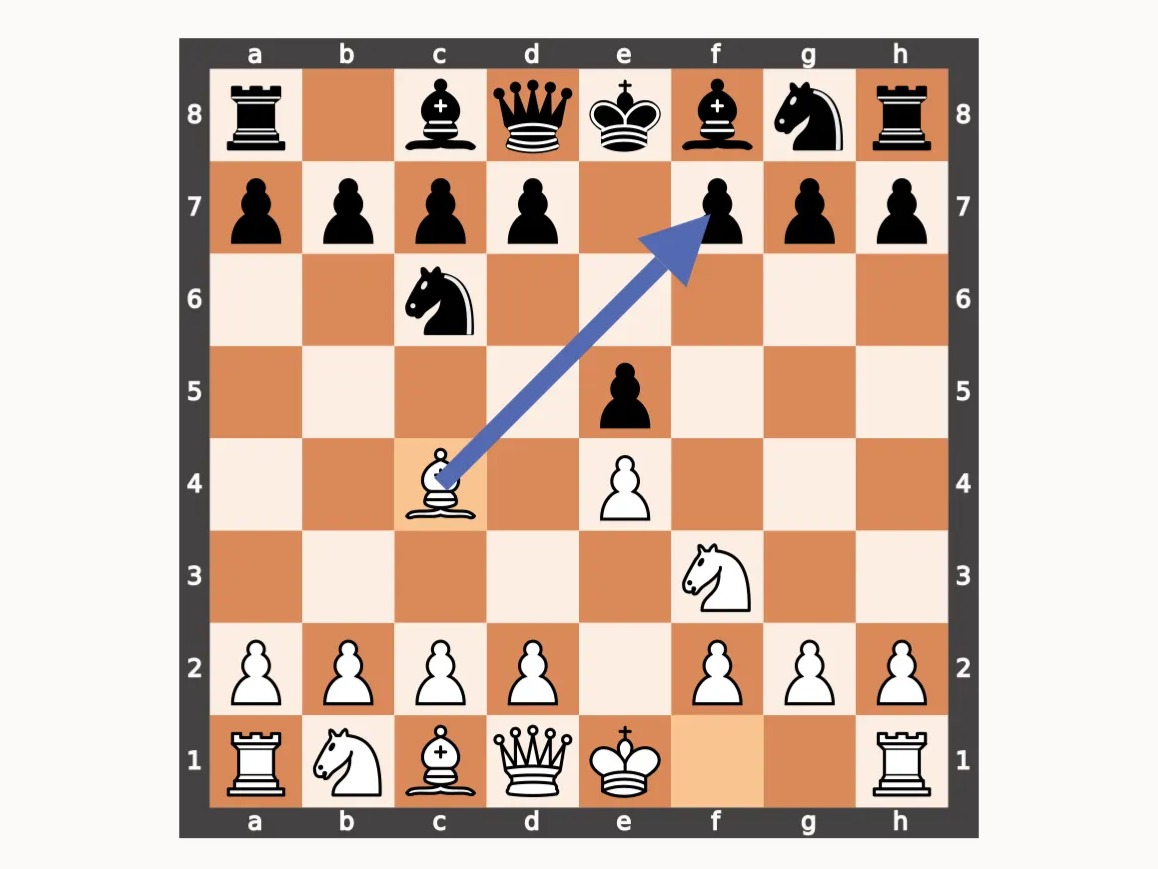
Moves: 1.e4 e5 2.Nf3 Nc6 3.Bc4
One of the oldest openings and one of the best to start with. White puts a pawn in the center, the knight attacks the e5 pawn, and the bishop lands on c4, aiming at f7, a square that only Black's king defends early in the game.
Why it suits beginners: The pieces develop in the most natural way, and castling comes very quickly afterwards.
2. The Ruy Lopez (Spanish Opening)
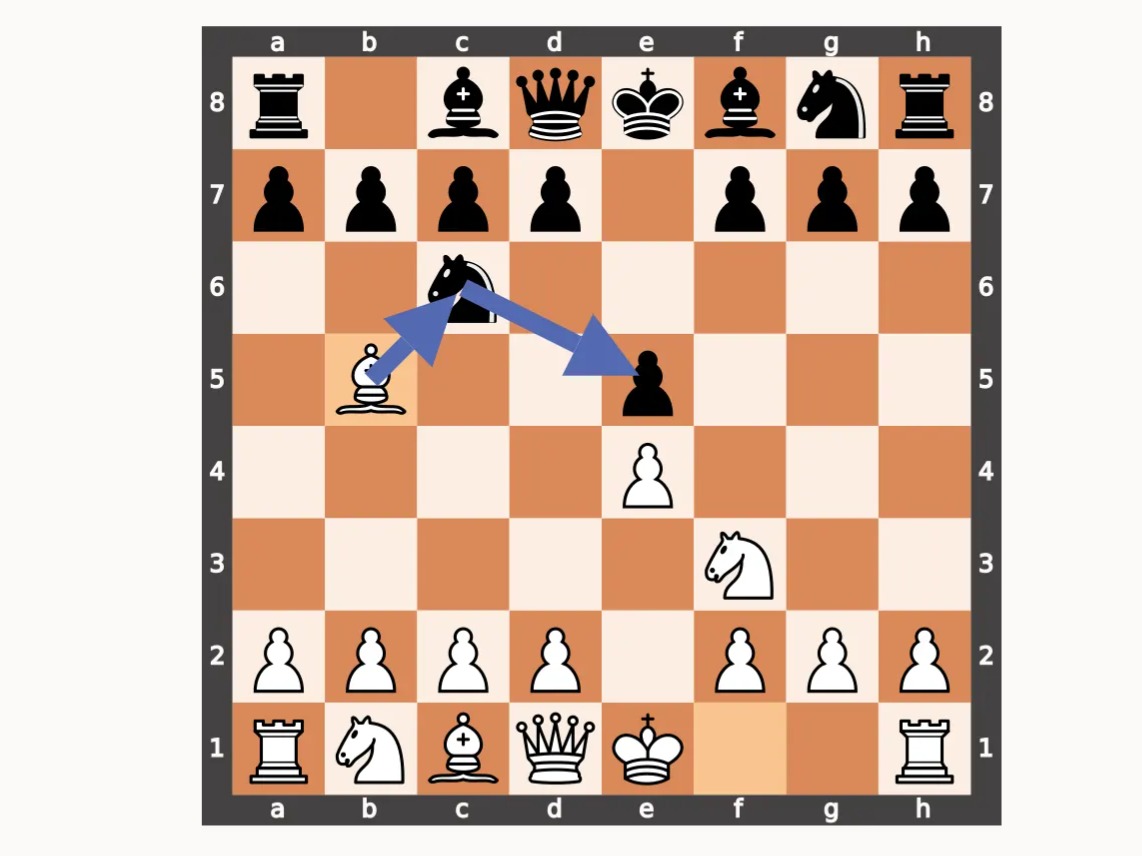
Moves: 1.e4 e5 2.Nf3 Nc6 3.Bb5
Named after Ruy López, a 16th-century Spanish priest. Instead of c4, the bishop goes to b5 and puts pressure on the knight that defends the e5 pawn. The idea is indirect: White is in no hurry and slowly squeezes Black's center.
Tip: The Ruy Lopez asks for a bit more patience. If your child enjoys calm, planned play, it's a good choice.
3. The Scotch Game
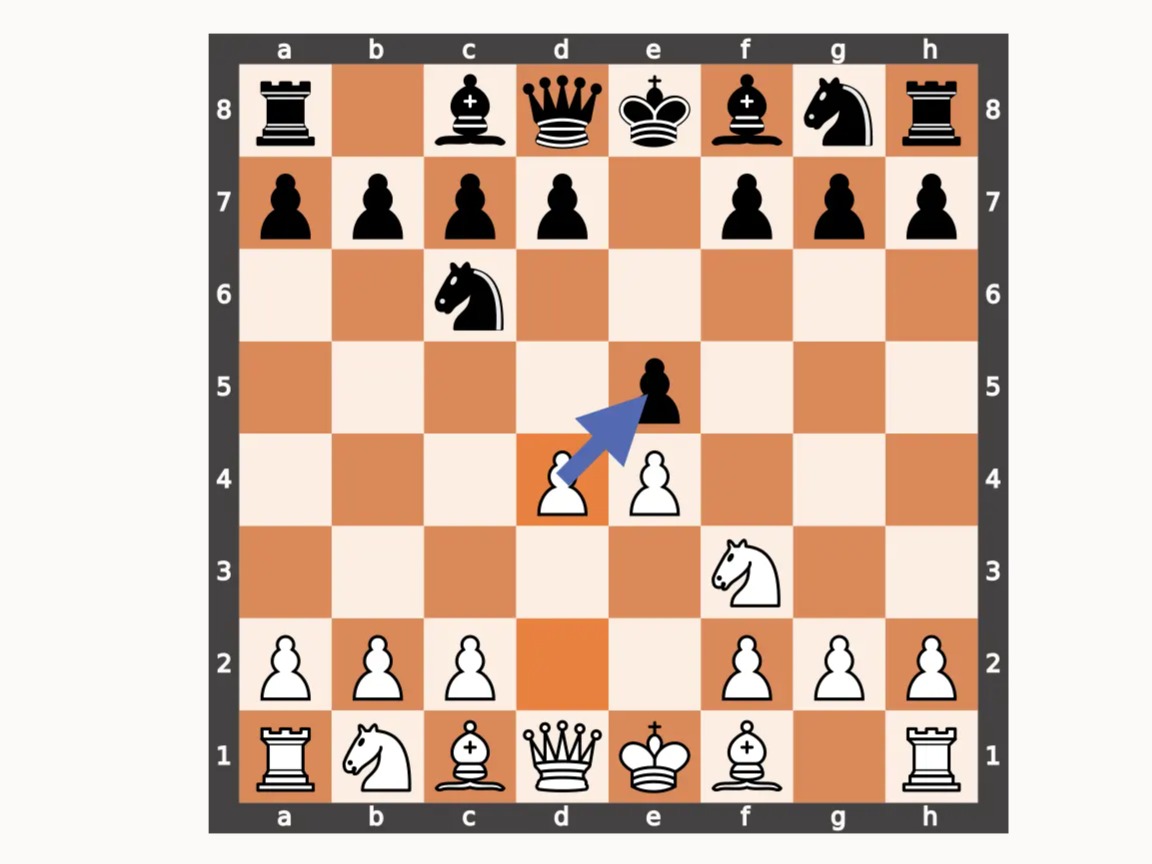
Moves: 1.e4 e5 2.Nf3 Nc6 3.d4
In the Scotch, White doesn't wait and opens the center on move three. After the pawn trade, the game becomes open and lively, and the pieces move freely.
Good for: Players who like attacking chess and clear positions and don't want to memorize lots of theory.
4. The Queen's Gambit
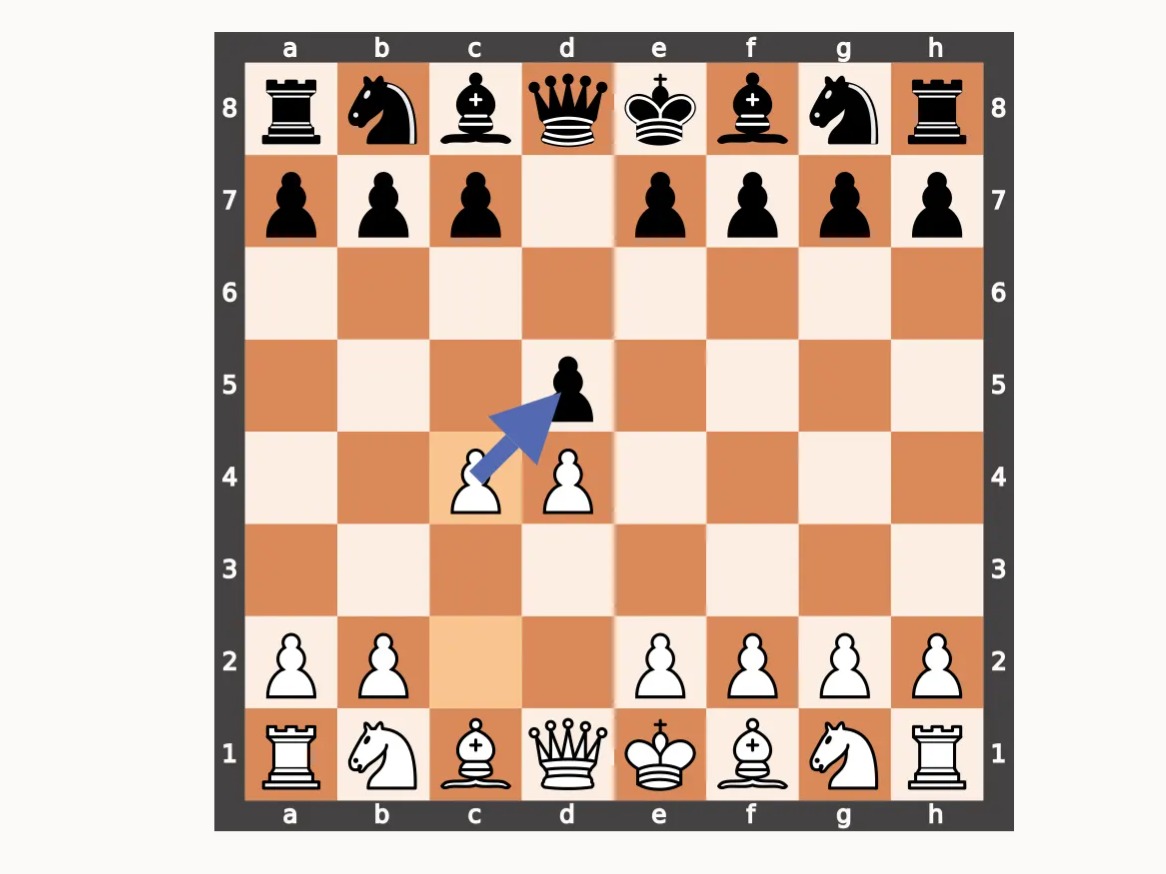
Moves: 1.d4 d5 2.c4
Here White starts with the queen's pawn and offers a side pawn to pull Black's d5 pawn away from the center. It's called a gambit, but in practice White usually wins the pawn back, so there's no real risk.
Why learn it: The Queen's Gambit introduces "queen's pawn" chess, a slightly calmer style than 1.e4 openings that builds a good understanding of pawn structures.
5. The London System
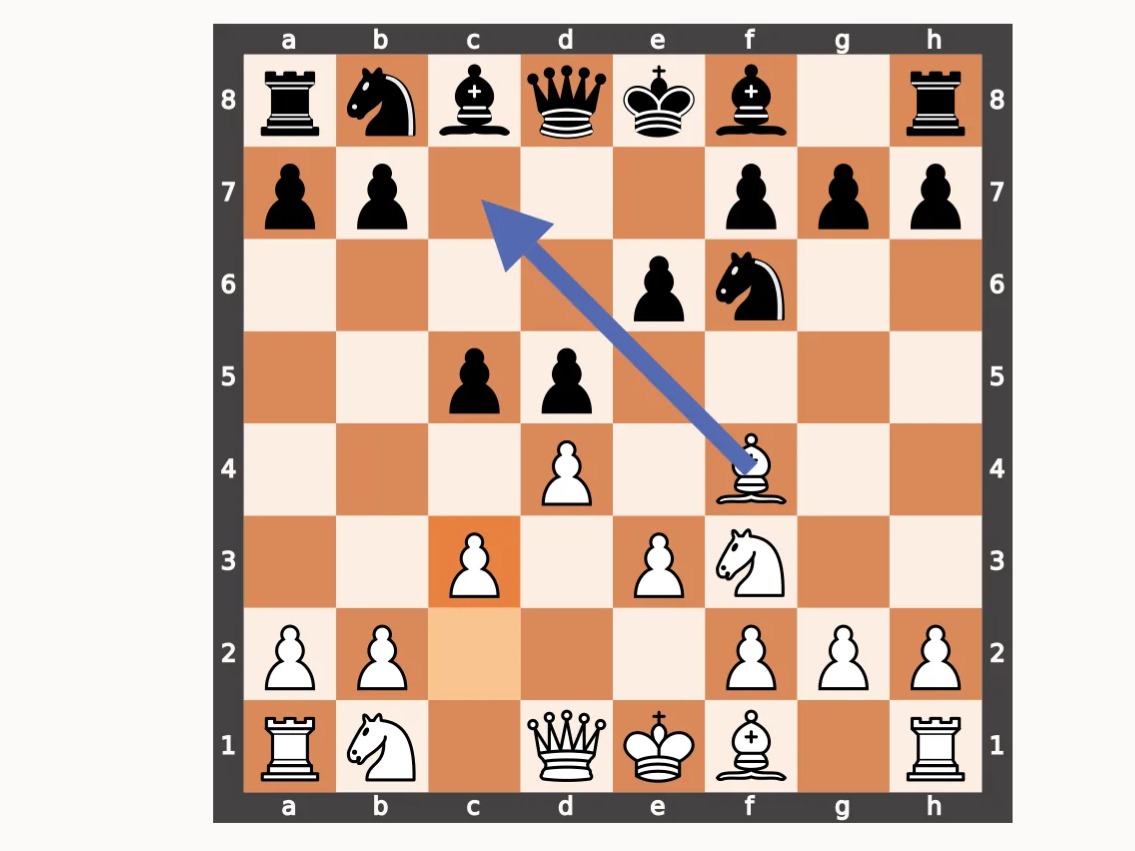
Moves (sample setup): 1.d4 d5 2.Bf4 Nf6 3.e3 e6 4.Nf3 c5 5.c3
The London is more of a setup than a fixed line. Almost regardless of what the opponent does, White places pawns on d4, e3 and c3 and the bishop on f4, where it eyes c7 and Black's center.
Good for: Anyone who wants to start every game from a familiar position with as little memorization as possible. Just make sure the London doesn't stop you from learning open, tactical games.
5 Chess Defenses for Black
Black is a move behind, so the first goal is to equalize and reach a safe position. Since White usually starts with 1.e4 or 1.d4, the defenses are grouped that way.
6. The Sicilian Defense (against 1.e4)
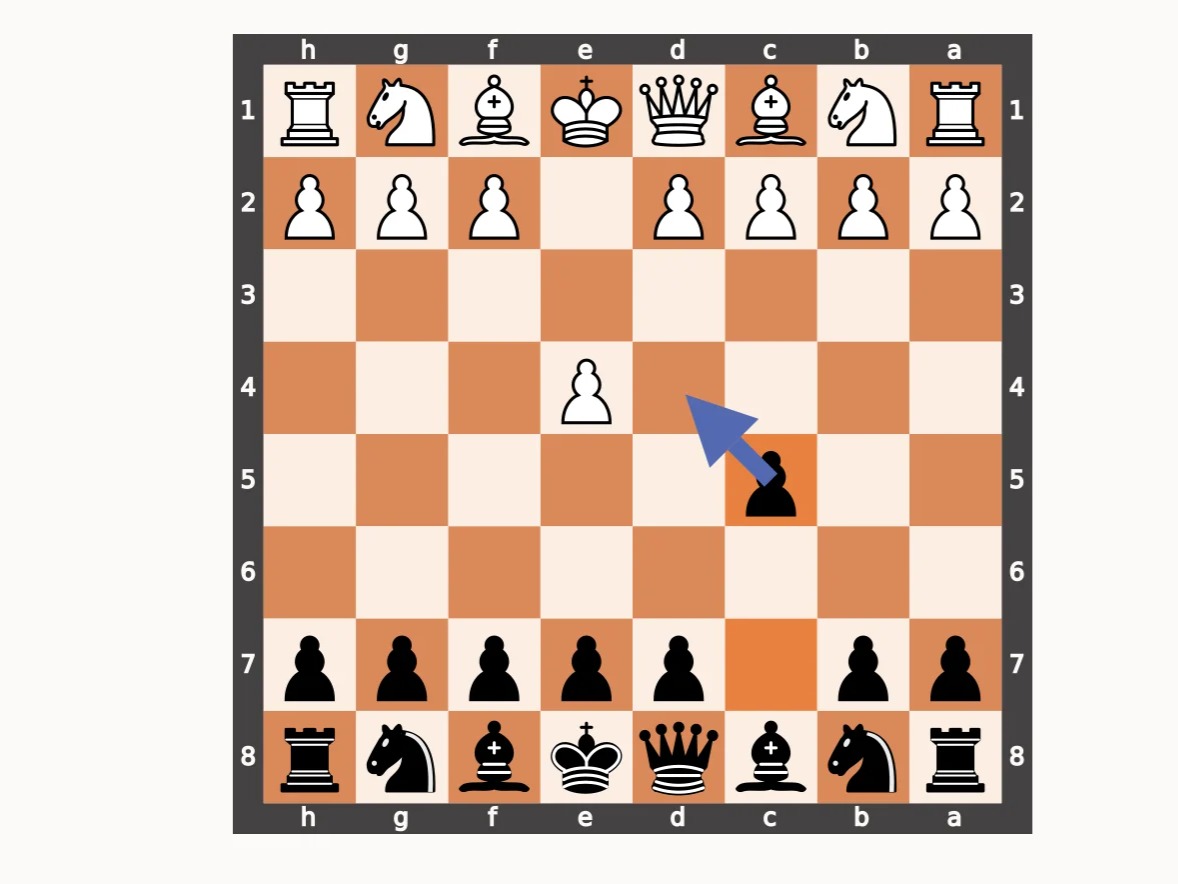
Moves: 1.e4 c5
The Sicilian is the most popular reply to 1.e4 at professional level. Instead of copying White, Black controls d4 with the c-pawn and creates an unbalanced game.
A warning for beginners: The Sicilian comes with a lot of theory and gets sharp very quickly. It's better to start with one of the next defenses and come back to it later.
7. The French Defense (against 1.e4)
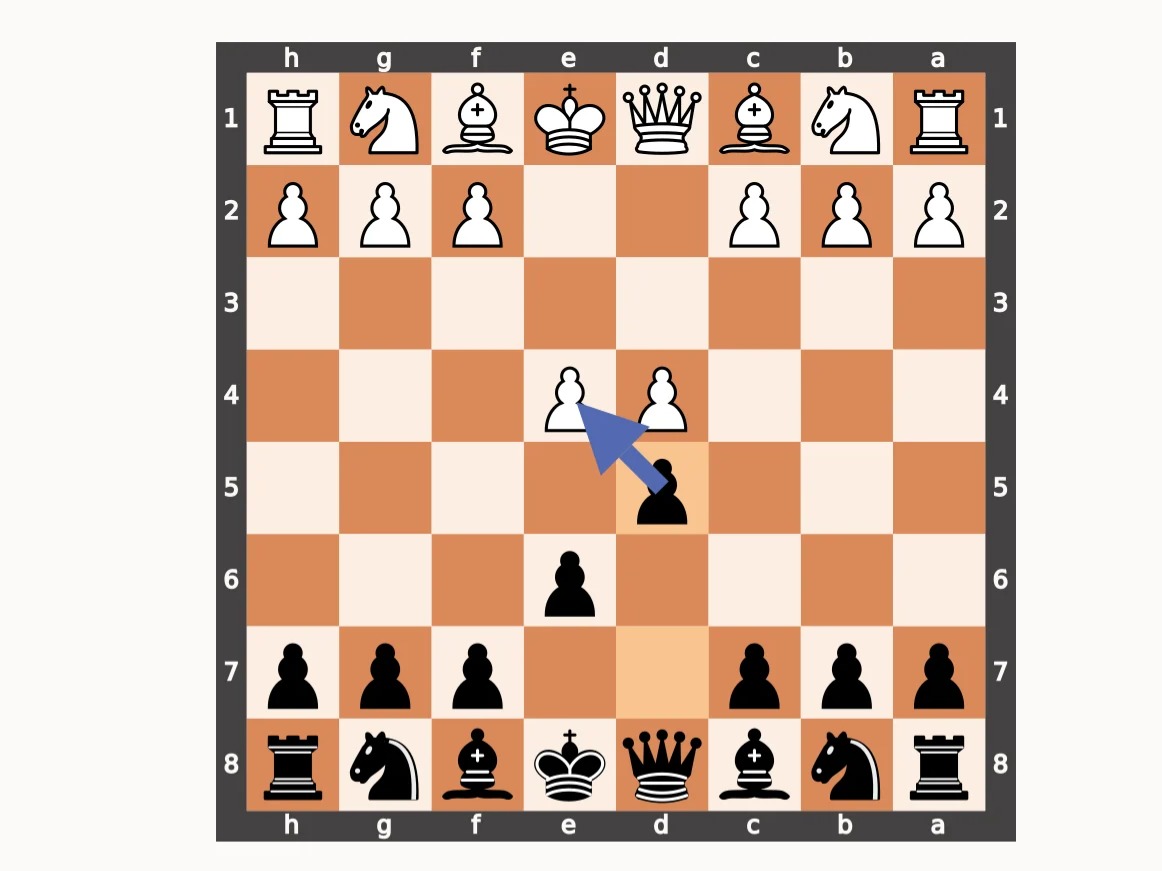
Moves: 1.e4 e6 2.d4 d5
Black first prepares with e6, then attacks the e4 pawn with d5. The pawn structure is solid, and Black usually hits White's center later with c5.
The drawback: Black's light-squared bishop (on c8) gets stuck behind its own pawns, and freeing it is one of the key lessons of this defense.
8. The Caro-Kann Defense (against 1.e4)
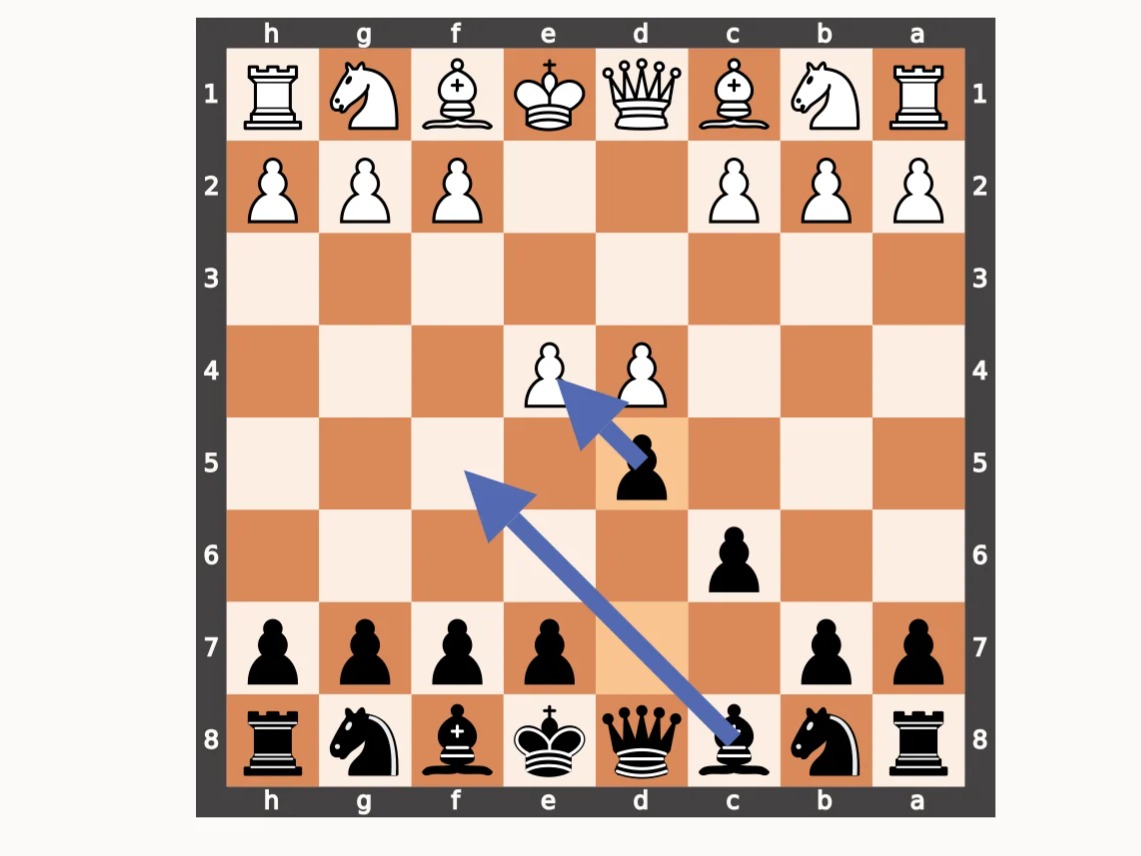
Moves: 1.e4 c6 2.d4 d5
The idea is similar to the French, but Black supports d5 with c6. As a result, the c8 bishop stays free and can come out to f5 or g4.
Why it's great for beginners: It leads to safe, logical positions, Black's king is less exposed to early attacks, and there are few dangerous traps.
9. The Scandinavian Defense (against 1.e4)
Moves: 1.e4 d5 2.exd5 Qxd5 3.Nc3 Qa5
Black challenges the center right away with d5. After the trade, the queen comes out early, and when White's knight attacks it, it retreats to a5, from where it puts pressure on the c3 knight.
The upside: It's easy to learn, because White has fewer ways to steer the game into complicated lines. Just remember that bringing the queen out early is usually a mistake in other openings; here it's a calculated exception.
10. The Queen's Gambit Declined (against 1.d4)
Moves: 1.d4 d5 2.c4 e6
When White plays the Queen's Gambit, the simplest answer is to leave the pawn alone and support d5 with e6. Black holds the center and develops calmly.
Good for: Players looking for a solid, reliable answer to 1.d4 with the black pieces.
The 10 Openings at a Glance
Italian Game: Color: White · Key move: 3.Bc4 · Style: Open and natural · Difficulty for beginners: Easy
Ruy Lopez: Color: White · Key move: 3.Bb5 · Style: Slow pressure · Difficulty for beginners: Medium
Scotch Game: Color: White · Key move: 3.d4 · Style: Open and lively · Difficulty for beginners: Easy
Queen's Gambit: Color: White · Key move: 2.c4 · Style: Positional · Difficulty for beginners: Medium
London System: Color: White · Key move: Bf4 · Style: Fixed setup · Difficulty for beginners: Easy
Sicilian: Color: Black · Key move: 1...c5 · Style: Sharp and unbalanced · Difficulty for beginners: Hard
French: Color: Black · Key move: 1...e6 · Style: Closed and solid · Difficulty for beginners: Medium
Caro-Kann: Color: Black · Key move: 1...c6 · Style: Safe and logical · Difficulty for beginners: Easy
Scandinavian: Color: Black · Key move: 1...d5 · Style: Direct · Difficulty for beginners: Easy
Queen's Gambit Declined: Color: Black · Key move: 2...e6 · Style: Solid · Difficulty for beginners: Easy
Where to Start: A Simple Plan
You don't need to learn all ten openings at once. A small repertoire is enough:
With White: the Italian Game or the London System.
With Black against 1.e4: the Caro-Kann or the Scandinavian.
With Black against 1.d4: the Queen's Gambit Declined.
Then play only these for a few weeks, and after each game check where you drifted from the three principles of center, development and king safety. The goal isn't to memorize ten moves; it's to know why each move is played. If you want a plan for after the opening too, read 10 chess techniques every player should know.
Common Opening Mistakes
Bringing the queen out early and wasting time running from the opponent's pieces
Pushing lots of edge pawns instead of developing knights and bishops
Not castling and leaving the king in the center
Memorizing moves without understanding the idea, so the first unexpected reply throws the whole game off
Conclusion
To get started in chess, pick one opening with White and one or two defenses with Black, and practice them by understanding the ideas rather than memorizing. The Italian, the London, the Caro-Kann, the Scandinavian and the Queen's Gambit Declined are the best choices at this stage; with more experience you can move on to the Sicilian, the Ruy Lopez or the French.
If you'd like a coach by your side, or your child's, to choose openings that fit your style and point out mistakes in real games, you can find the right teacher in Darsoon's online chess classes and start with a free intro session before deciding anything.
