
French Immersion or English School in Ontario? A Guide for Iranian Families
Moving to a new country comes with many important decisions, and for Iranian families in Ontario, choosing the right educational path for your child is one of the biggest.
Written by: Mahroo Mahdavi
Number of Views: 139
Reading time: 4 min
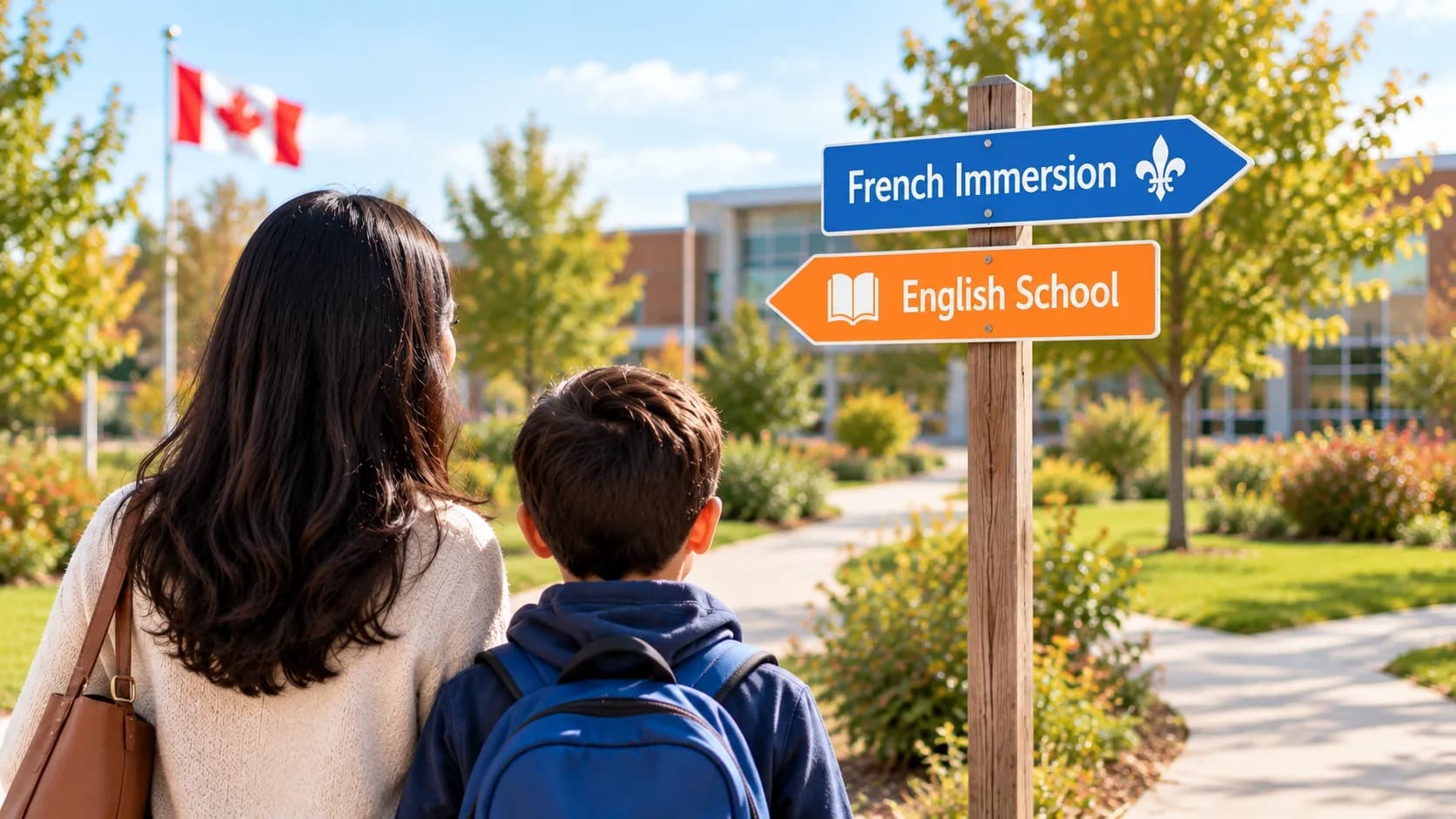
One of the first questions Iranian families ask after arriving in Ontario is: Should we enroll our child in French Immersion or a regular English school? The answer is different for every family and depends on your child’s age, your family’s plans, and even the neighborhood where you live.
The problem is that many parents start thinking about this decision only after the enrollment deadline has passed. In this guide, we’ll cover everything you need to know about French Immersion in Ontario in a simple, practical way to help you make the right school choice.
What Is French Immersion in Ontario, and at What Age Does It Start?
French Immersion is a program offered within public schools, not a private school or a French-language school. This means there are no tuition fees, and the program is managed by the same local school board. The main difference is the language of instruction: in the early years, most subjects are taught in French, and the proportion of English gradually increases.
The age at which your child starts is one of the most important factors, because each school board has its own rules.
Early French Immersion: In most Toronto-area school boards, it starts in Grade 1. Some boards, such as those in Ottawa, offer it from Kindergarten.
Middle or Extended French: Some school boards offer entry in Grade 4 or 5, but these programs are not available everywhere.
Enrollment deadlines: Applications usually open in the fall or early winter, often about a year before the program begins. Some boards use a lottery if there are more applicants than available spaces.
Joining French Immersion after the early grades can be difficult and usually requires some previous knowledge of French. So, if your child is four or five years old, this may be the right time to start exploring your options.
French Immersion vs. English School: What Are the Differences?
To quickly understand the difference between French Immersion and an English school in Ontario, take a look at this table:
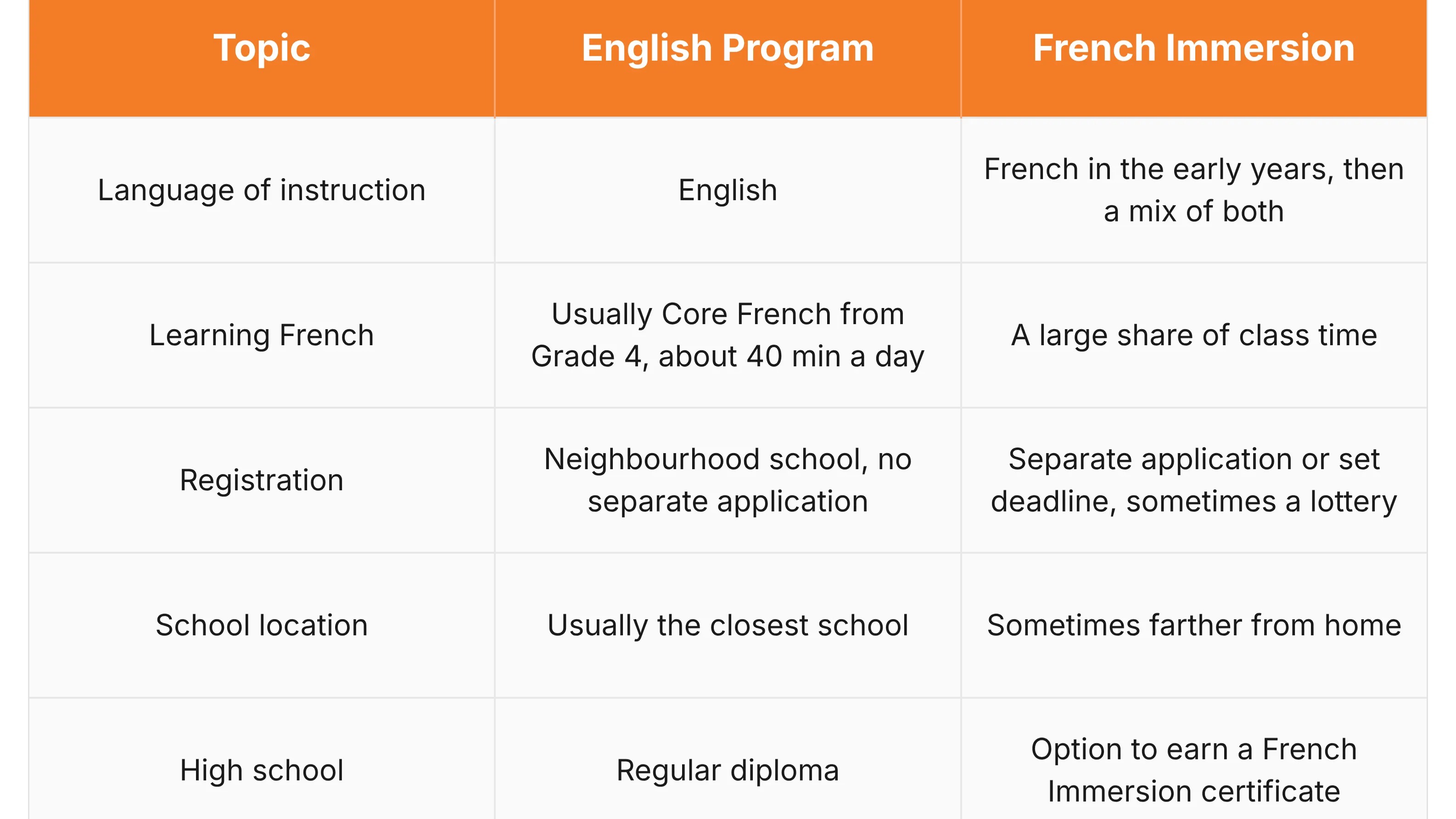
One thing many parents don’t know is that both pathways lead to the same Ontario Secondary School Diploma (OSSD). French Immersion students may also earn a French Immersion certificate if they complete the required number of credits taught in French during high school, typically 10 credits.
Another common misconception is that French Immersion schools in Ontario are different from French-language schools, known as Conseils scolaires. French-language schools primarily serve families whose first language is French. Other families may also apply, but admission is decided by the school’s own admissions committee.
Benefits of French Immersion for Iranian Children
Growing up with three languages: A child who speaks Persian at home may learn Persian, English, and French simultaneously through French Immersion. Children who are already growing up with two languages may find it easier to adapt to another language.
Career advantages in Canada: French is one of Canada’s two official languages. Being bilingual can be a significant advantage for many federal government jobs and some private-sector positions.
English skills can keep pace: Many French Immersion students catch up with their English-program peers in English by the middle elementary grades. This concern is generally greater during the early years.
A fresh start: In Grade 1 French Immersion, most children begin learning French from scratch. This means your newly arrived child may not be at a disadvantage in French compared with classmates.
More options in the future: Continuing education at French-language or bilingual universities, such as the University of Ottawa, may become easier.
Disadvantages and Challenges
Helping with homework: Most Iranian parents don’t speak French, so helping with schoolwork can be challenging. The good news is that homework is usually simple in the early grades, and schools don’t expect parents to know French. Reading books in Persian or English at home can also help develop your child’s reading skills.
The challenge of learning two new languages: If your child has recently arrived in Canada and doesn’t yet speak English, learning two new languages at the same time may feel overwhelming. This can be a bigger challenge for older children.
Darsoon is an online learning platform for Persian speakers living abroad. It offers private online classes with different teachers to help children strengthen their English skills, learn French and study other languages and subjects. Whether you want to help your child improve their English for school or take French learning more seriously, you can find a teacher who fits your child’s needs and your family’s schedule. All classes take place online, with flexible scheduling. You can also book a free introductory session to meet your chosen teacher and discuss your child’s learning needs before starting classes.
Less specialized support: French Immersion programs may have fewer specialized teachers and support staff available for certain learning or speech-related difficulties. As a result, some children transfer to an English program after a few years.
Transportation and neighborhood friends: A French Immersion school may not be close to home, and your child may not attend school with other children from your neighborhood.
An easier switch in one direction: Moving from French Immersion to an English program is generally easier than moving from an English program into French Immersion, which may require previous French-language skills.
What to Consider Before Choosing a School in Ontario
Check enrollment deadlines now. Visit the website of your local school board. Deadlines are often announced in the fall, and application windows can be short.
Learn your school board’s rules. Entry ages, lotteries, and school bus services vary among Toronto, Peel, York, and Ottawa school boards. Catholic school boards also offer French Immersion, but their admission requirements may differ.
Attend an Information Night. These sessions are often free and available online. They’re an excellent opportunity to ask questions and learn more about the program.
Ask the school these questions:
Is school bus transportation available for French Immersion students?
What support is available for children with learning difficulties?
Where is the French Immersion high school for this area?
Consider your child’s needs, not just their future opportunities. If your child has speech difficulties, has just arrived in Canada, or feels overwhelmed by major changes, an English school may be a better starting point.
Don’t forget Persian. With French Immersion, Persian becomes your child’s third language. If you don’t make time for it at home, it may be the first language to weaken.
Through Darsoon’s online Persian classes with a private online Persian tutor, your child can strengthen their speaking, reading, and writing skills in Persian at a pace suited to their age and current level.
Final Thoughts: French Immersion or English School?
If your child is young, adapts well to new environments, and your family values learning another language, French Immersion in Ontario can be a good choice. Just make sure you don’t miss the enrollment deadline.
If your child is older, has recently arrived in Canada, or needs more support, an English school in Ontario may be a more comfortable option. Your child can still learn French through the school’s Core French program.
Remember, neither pathway is a dead end. Both can lead to the same high school diploma, and both keep university options open. The most important thing is to make your decision based on your child’s needs and your family’s plans, rather than simply following other people’s recommendations.