
Online Farsi Classes: Your Complete Guide to Learning from Home
For many Persian-speakers living abroad, learning Farsi is more than just acquiring a new skill; it's a vital link to heritage, family, and community.
Written by: Mahroo Mahdavi
Number of Views: 195
Reading time: 5 min
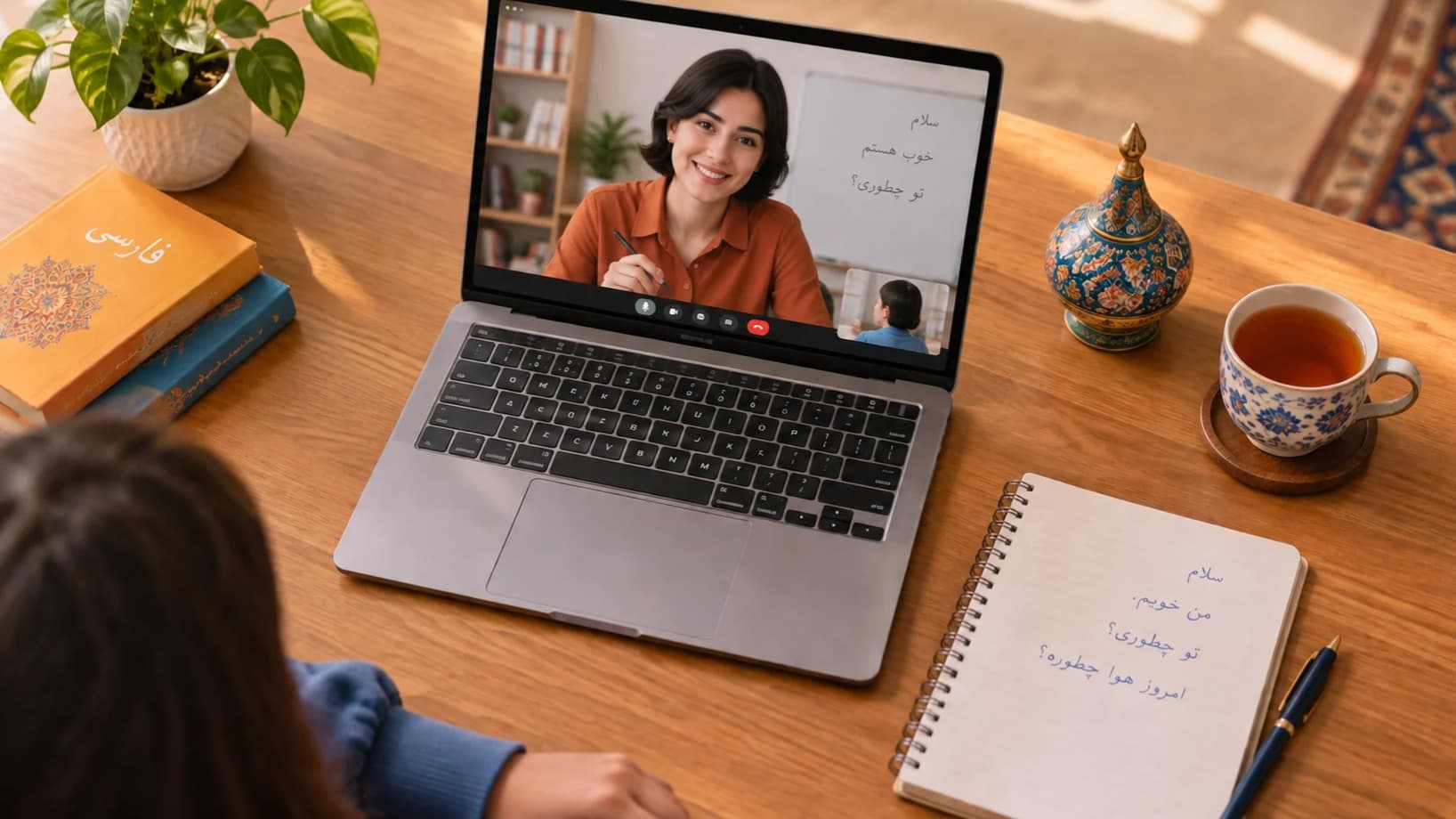
Learning Persian is very important for many Iranian families living outside Iran. This is especially true when children are born in another country or leave Iran at a young age. In these situations, they may hear and use Persian less often than the language spoken in their surrounding environment.
In such cases , online Persian classes can be a simple way to learn and strengthen Persian. Children and teenagers can practice with a Persian-speaking teacher from home, without the need to travel, and gradually improve different language skills.
But what makes a good online class? How should you choose the right teacher, and what should children learn in a Persian class?
Why Are Online Persian Classes a Good Choice?
One of the main advantages of online classes is convenience. Families do not need to spend time traveling to and from each session. Classes can take place at home and at a time that fits the child's school schedule and other activities.
On the other hand, private online classes make it possible to adjust the learning content to each student's level and needs. For example, one child may speak Persian well but have difficulty reading and writing. Another child may not feel confident enough when speaking Persian.
In a private class, the teacher can focus on the areas where the student needs more practice.
Some important benefits of online Persian classes:
The ability to attend classes from any city or country
Easier scheduling and greater flexibility
Direct communication with a Persian-speaking teacher
Lessons adjusted to the student's age and level
More opportunities to practice speaking in private classes
No commuting time
The ability to continue learning while traveling or moving
What Do We Learn in an Online Persian Class?
Learning Persian is not just about memorizing words and grammar rules. A good learning program should develop different language skills together.
Depending on the student's age and level, classes can focus on areas such as:
Speaking:
Students learn how to talk about everyday topics, ask questions, and respond to others. For children, using familiar topics such as school, friends, family, and hobbies can make practice easier.
Reading:
If the goal is for a child to be able to read Persian, it is best to start with letters and simple words and gradually move on to sentences and longer texts.
Writing:
Writing in Persian can be a little more challenging for children who have grown up outside Iran. Practicing words, short sentences, and then simple texts can help them improve.
Listening and Understanding Persian:
Sometimes a child knows many Persian words but cannot understand an entire sentence when someone speaks quickly. Listening practice can help overcome this difficulty.
Vocabulary and Sentence Building:
Learning individual words is not enough. Children should also learn how to use those words in real sentences.
How Are Persian Classes for Children Living Outside Iran Different?
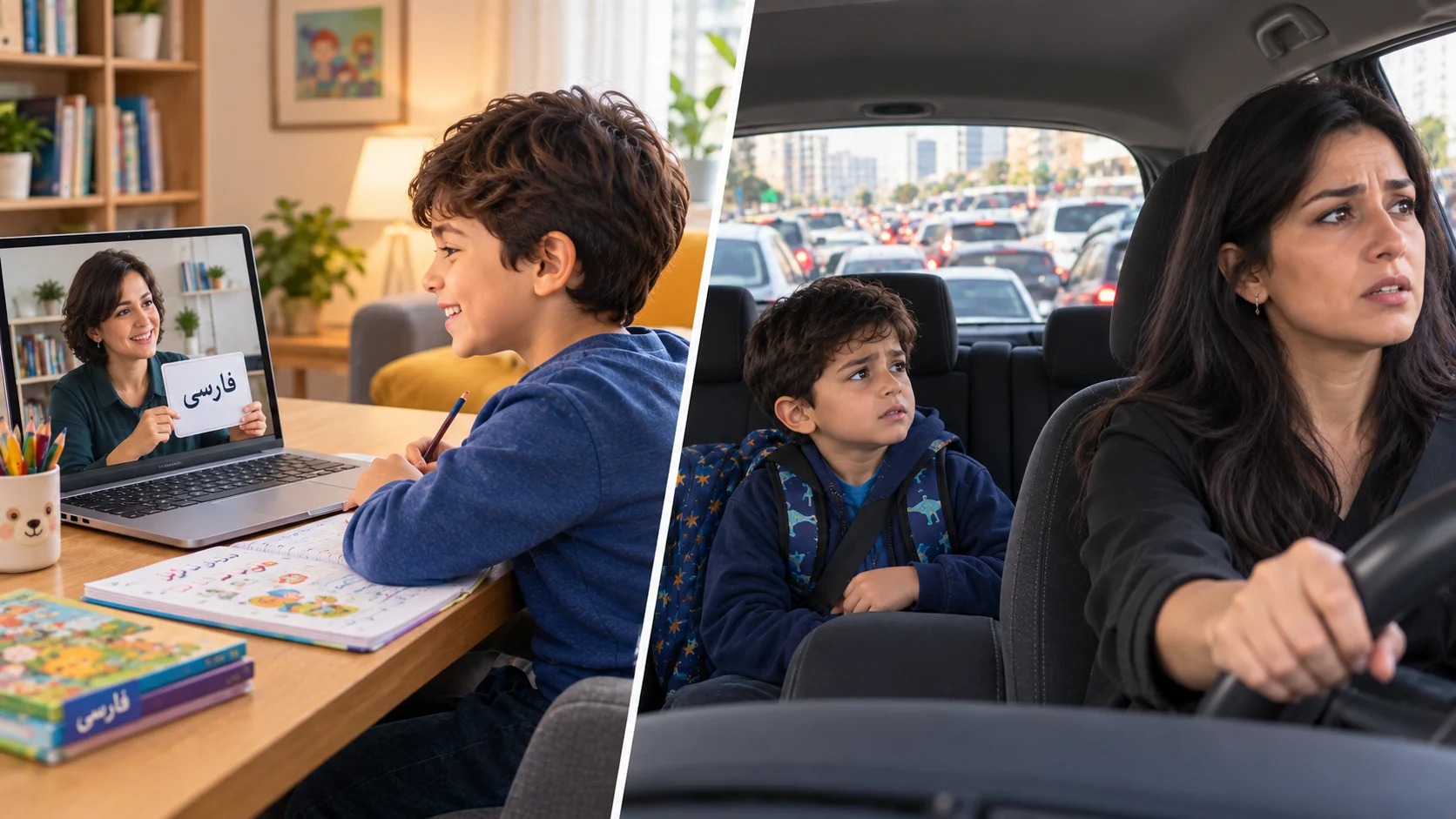
A child growing up in Iran usually hears Persian at home, at school, on television, and in their surrounding environment. But the situation is different for a child living in Canada, the United States, or another country.
Persian may be the language spoken at home, but the child may spend most of their time using another language. For this reason, Persian classes should be adapted to their everyday life.
For these children, using engaging topics can make learning easier. Persian stories, simple poems, games, conversations about family, and even learning about Iranian traditions and culture can all be part of the class.
The goal is not simply for a child to memorize a few Persian words. What matters is that they can use Persian in everyday situations and maintain their connection with their family's language and culture.
How Do You Choose the Right Online Persian Teacher?
Choosing the right teacher is one of the most important steps when starting a class. Simply being able to speak Persian does not necessarily mean that a teacher is the right choice for teaching Persian to children.
Before making a decision, it is helpful to consider a few things:
Does the teacher have experience working with children or teenagers?
Is their teaching method appropriate for the child's age?
Does the class focus only on memorizing vocabulary and grammar rules?
Does the child have enough opportunities to speak and practice during the class?
Can the teacher adjust the lessons according to the child's level?
Does the child feel comfortable and have a positive relationship with the teacher?
Is the online class genuinely interactive?
For children, having a good relationship with their teacher is very important. When children feel comfortable in class, they are more likely to ask questions, make mistakes, and try again.
Darsoon: An Option for Online Persian Learning
If you are looking for online Persian classes with a Persian-speaking teacher, Darsoon is an online education platform that offers private classes for Persian speakers in different countries.
At Darsoon, families can choose a teacher based on the student's age, level, and learning goals. Classes are held online, and session times can also be arranged around the family's schedule.
One important feature is the opportunity to attend a free introductory session before starting regular classes. This session gives parents and students a chance to meet the teacher and see whether their teaching style and communication approach match the student's needs.
This can be especially important for children because a teacher who is a great fit for one student may not necessarily be the right choice for another.
How Can You Improve Persian Learning at Home?
Classes alone are not enough. Even if a student attends one or two classes each week, using Persian on other days can make the learning process more effective.
These activities do not need to be long or difficult. Even a few minutes of practice each day can be helpful.
For example:
Talk about everyday events at home using a few Persian sentences.
Ask your child to tell you a short story in Persian.
Use new words in simple sentences.
Watch age-appropriate movies or programs in Persian.
Ask your child simple questions in Persian while shopping, cooking, or playing.
If your child enjoys writing, ask them to write a few sentences about their day.
Talk in Persian about family memories, foods, celebrations, and Iranian traditions.
Most importantly, do not turn Persian into just another “school subject.” When children can use the language in real-life situations, learning becomes more natural for them.
Are Private Online Persian Classes Better Than Group Classes?
Both options can work well, but the right choice depends on the student's circumstances.
In a private class, the entire session is focused on one student, and the teacher can adjust the lesson according to their needs. This can be especially useful for children who have a specific level or need additional practice in a particular skill.
Group classes can also provide a good opportunity to communicate and interact with other language learners. However, each student has less speaking time, and the pace of the class may not be ideal for everyone.
For families with specific learning goals, it is better to consider the child's level and needs before choosing between a private and a group class.
What Goals Should You Set Before Starting Persian Classes?
It is helpful for families to decide from the beginning what they want their child to achieve through the classes. Learning goals can be different for every child.
For example:
Speaking more comfortably with parents and family members
Learning to read and write in Persian
Improving conversational Persian
Strengthening Persian to communicate with grandparents
Becoming more familiar with Persian culture and literature
Maintaining and strengthening Persian alongside the child's primary language
When the goal is clear, choosing the right teacher and learning plan also becomes easier.
Frequently Asked Questions
How Long Does It Take to Learn Persian Conversation Online?
This varies from one learner to another. However, with consistent practice and a good online course (2–3 classes per week), most beginners can expect to have basic conversations within 4–6 months. Your progress will depend on your commitment and the amount of time you dedicate to learning.
Are Online Persian Classes as Effective as In-Person Classes?
Absolutely. For many learners, online classes can be even more effective because of their convenience and personalized approach. Modern online classes with live interaction, experienced teachers, and small group sizes can provide an engaging and highly effective learning environment.
What Technology Do I Need for an Online Persian Class?
All you need is a stable internet connection and a device with a camera and microphone, such as a laptop, tablet, or smartphone. Most platforms, including Darsoon, use easy-to-access video conferencing software.
Conclusion
Online Persian classes can be a simple and flexible way to learn Persian, especially for Iranian children and teenagers living outside Iran. Being able to attend classes from home, choose a Persian-speaking teacher, and adjust the learning plan based on the student's needs are some of the main advantages of this approach.
However, simply being online is not enough. The teacher's experience, teaching method, level of interaction, and relationship with the student all play an important role in the effectiveness of the learning process.
If the family's goal is for a child to improve their Persian speaking, reading, or writing skills, it is best to choose classes based on the child's actual needs and create simple opportunities to use Persian at home alongside the lessons.