
Navigating Canadian Schools: Public vs. Private for Immigrant Families
Deciding between public and private schools in Canada is a major step for immigrant families. Discover the key differences in costs, curriculum, and community integration.
Written by: Mahroo Mahdavi
Number of Views: 417
Reading time: 7 min
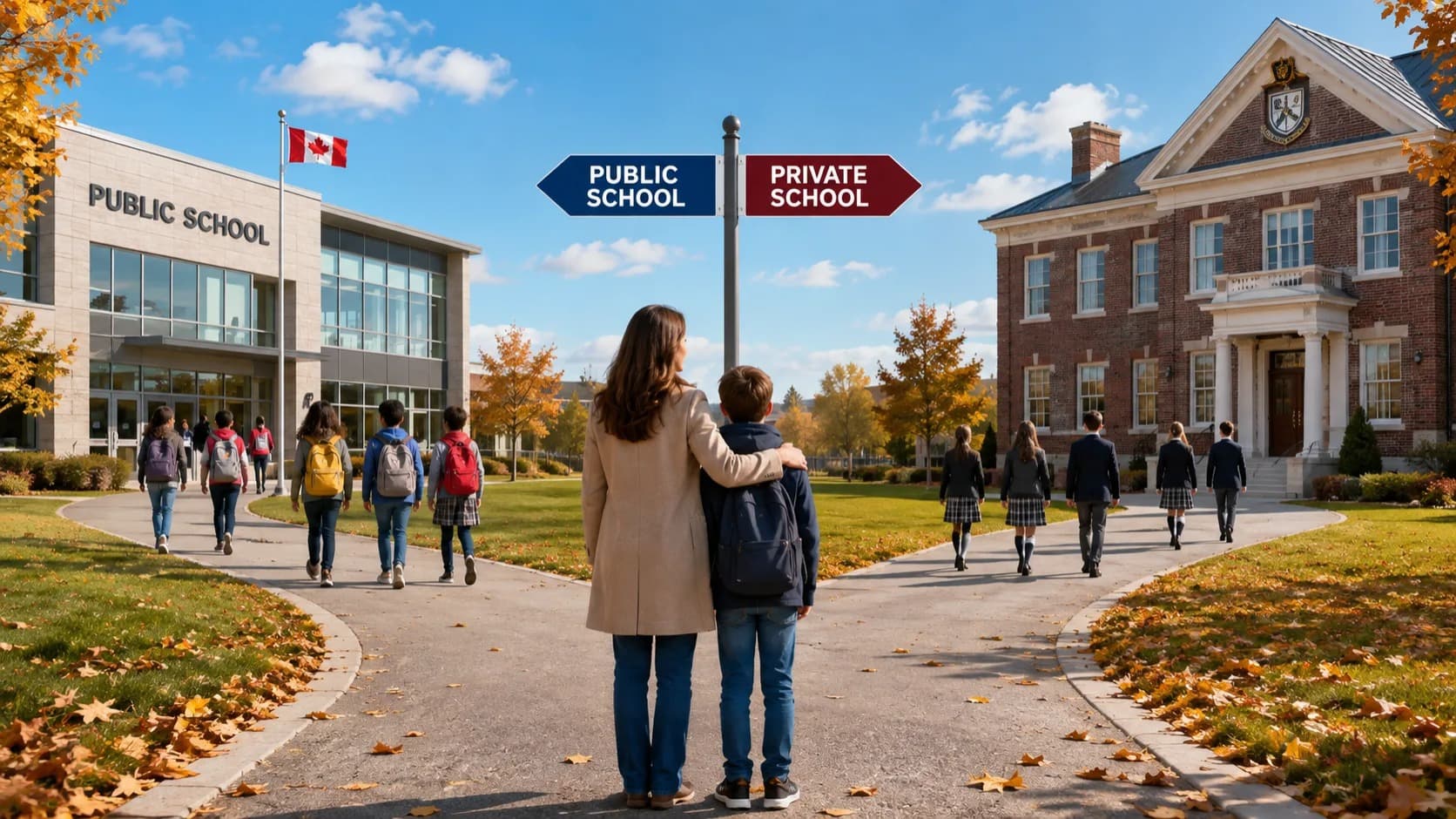
Navigating Canadian Schools: Public vs. Private for Immigrant Families
Introduction: Making the Right School Choice in Canada (Answer-First for Immigrants)
Moving to a new country like Canada brings a wave of exciting opportunities and important decisions. For families with children, perhaps none is more critical than choosing the right school. As you settle into your new life, you'll face a fundamental question: Should you enroll your child in a public or a private school? The sheer number of options can feel overwhelming, especially when navigating a new educational landscape.
So, what's the short answer? There is no single "best" choice that fits every family. The ideal school for your child depends entirely on your family's unique circumstances, financial situation, your child's personality, and their specific learning needs. Both the public and private systems in Canada offer excellent educational pathways, but they do so with distinct philosophies, structures, and costs. This article will break down the key differences, pros, and cons of each system from the perspective of a newcomer family, empowering you to make a confident and informed decision for your child's future.
Understanding the Canadian School System: A Quick Primer for Newcomers
Canada's commitment to education is evident in its high standards from Kindergarten through to Grade 12 (K-12). One of the first things to understand is that education is managed at the provincial level, not by the federal government. This means the curriculum in Ontario might have slight variations compared to the one in British Columbia or Quebec. For example, in Quebec, students typically attend secondary school until Grade 11 and then may proceed to a pre-university program called CEGEP. Despite these regional differences, the core commitment to quality education is consistent nationwide. The two main pathways available to your family are the publicly funded school system and the independently operated private school system.
Public Schools in Canada: Accessibility and Community Integration
Public schools are the backbone of the Canadian education system, with about 91% of children attending them. These schools are funded by the government through taxes and are free for all Canadian citizens and permanent residents to attend. Enrollment is typically based on your residential address, meaning your child will attend the school within your designated geographical "catchment area."
Pros for Immigrant Families:
No Tuition Fees: This is the most significant advantage for many newcomer families. Access to high-quality education without the burden of tuition fees allows families to allocate resources to other aspects of settling in Canada.
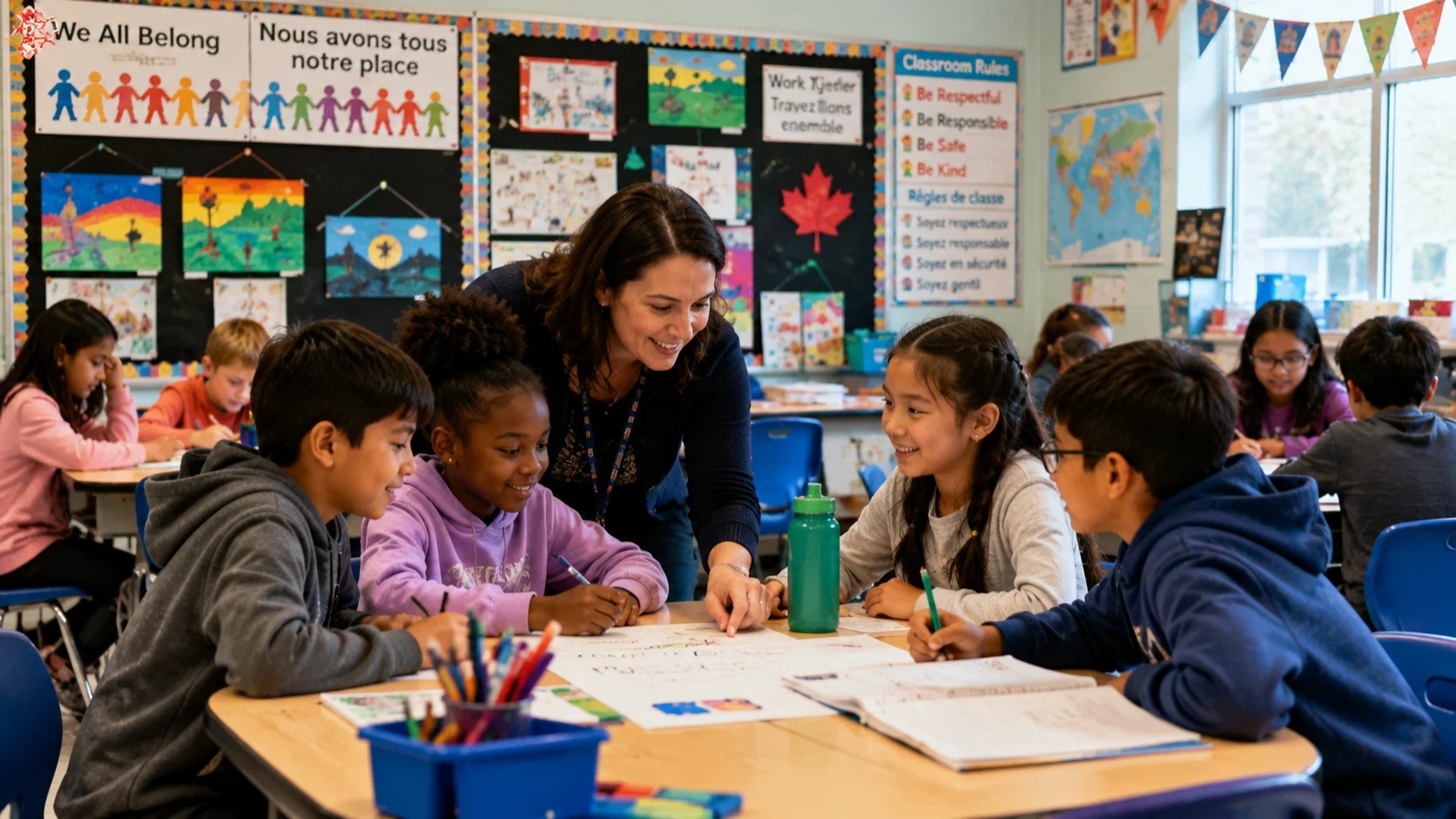
Strong Community Integration: Public schools are a microcosm of their local communities. They provide an excellent opportunity for both children and parents to integrate, make new friends, and build a local support network. This immersion helps accelerate social and cultural adaptation.
Excellent Language Support: Recognizing Canada's multicultural fabric, public schools have well-developed English as a Second Language (ESL) or French as a Second Language (FSL) programs. These programs are designed to help students new to the language adapt academically and socially.
Diverse Environment: Your child will learn alongside peers from a wide variety of cultural and socio-economic backgrounds. This exposure fosters tolerance, adaptability, and a global mindset from a young age.
Comprehensive Special Needs Support: Public schools are mandated to provide support for children with special educational needs, ensuring an inclusive environment for all learners.
Potential Cons:
Larger Class Sizes: Public schools often have larger class sizes than their private counterparts, which can sometimes mean less one-on-one attention from teachers.
Resource Variation: While the standard of education is high, the quality of facilities and extracurricular programs can vary between different school districts and even between schools in the same area.
Standardized Curriculum: Public schools follow a provincially mandated curriculum. While this ensures a consistent standard, it may offer less flexibility for specialized or niche programs compared to some private schools.
Private Schools in Canada: Specialized Environments and Enhanced Resources
Private schools, also known as independent schools, operate outside the public system and are funded primarily through tuition fees. They have the autonomy to offer enriched or alternative educational programs and often cater to specific interests or values. Admission is typically based on an application process that may include interviews, entrance exams, and a review of past academic performance.
Pros for Immigrant Families:
Smaller Class Sizes: A key selling point for private schools is a lower student-to-teacher ratio, often with class sizes between 12-20 students. This allows for more personalized attention and a learning plan tailored to your child's individual needs.
Specialized Programs: Many private schools have a specific focus, such as advanced academics, STEM, art, sports, or religious instruction. They are also more likely to offer globally recognized curricula like the International Baccalaureate (IB) or Advanced Placement (AP) programs.
Enhanced Facilities and Resources: Thanks to tuition fees and endowments, private schools often boast state-of-the-art facilities, including modern science labs, extensive libraries, and impressive athletic centres.
Strong Networks: These schools can provide valuable networking opportunities for both students and their families, building a community with shared goals and values.
Potential Cons:
Significant Tuition Fees: The cost is the most substantial barrier. Private day school tuition typically ranges from $15,000 to $30,000 annually, with elite boarding schools costing significantly more.
Less Diversity: Depending on the school's focus and tuition level, the student body may be less diverse from a socio-economic and cultural standpoint compared to public schools.
Potential for Exclusivity: The private school community can sometimes feel separate from the broader local neighbourhood, which might slow down a family's integration into their immediate community.
Choosing the “Best” Option for Your Child
The “best” school is the one that aligns with your family’s values, budget, and your child’s needs. Here are the key factors to consider:
Your Budget: This is the most practical place to start. Can you comfortably afford private school tuition, uniforms, and related expenses without creating financial pressure? Be realistic about the long-term commitment.
Your Child’s Personality: Does your child thrive in a busy and diverse environment, or do they need a calmer, more focused setting that a smaller class can provide? A self-motivated student may do well anywhere, while a child who needs more guidance may benefit from greater individual attention.
Academic and Personal Interests: If your child is particularly interested in an area such as robotics, a specific sport, or advanced chemistry, a private school that specializes in that field could be an excellent investment. If you are looking for a strong and well-rounded education, a highly rated public school can be an excellent choice.
Community and Integration Goals: How important is it for your family to connect with your local community? Public schools are natural community hubs. On the other hand, if you are looking for a specific community, such as one built around a particular educational philosophy, a private school may be a better fit.
The School’s Curriculum: If you choose a private school, make sure to check which curriculum it follows.
This is especially important during high school. In Ontario, for example, not all private schools are authorized to grant the credits or diploma pathway leading to the OSSD. Private schools that are authorized to offer credits toward the OSSD must meet specific requirements.
The School’s Actual Quality, Not Just Its Name: Parents sometimes assume that because a school charges high tuition, it must automatically provide a higher-quality education. However, it is important to research the school carefully before enrolling.
For example, ask about the following:
What qualifications and experience do the teachers have?
How many students are there in each class?
What curriculum does the school follow?
What extracurricular activities are offered?
How does the school communicate with parents?
What are the students’ academic results and overall performance?
What are the school’s policies regarding homework, assessment, and discipline?
Which Option Is Better for Iranian Families in Canada?
For Iranian families, another factor can also be important: language and a child’s adjustment to a new environment.
If your child has recently moved to Canada, they may need additional support with English or with certain school subjects such as math and science.
In this situation, you do not necessarily need to choose a private school simply because your child needs additional academic support.
Sometimes, a suitable public school + private tutoring or online classes can be an excellent option.
For example, a child can receive their main education at a public school and, alongside it, work with an online private tutor for subjects where they need more practice or support.
This approach allows families to strengthen their child’s education according to their individual needs without paying the high tuition fees of a private school.
Darsoon can support students alongside their regular school education with subjects ranging from math and science to Persian, English, chess, and music.
Private online classes make it possible to tailor the learning plan to each student’s level, needs, and goals.
In the End: Public or Private?
If we want to summarize it simply:
A public school can be a good choice if:
You are looking for a more affordable education.
The school in your local area has a good reputation and quality.
Your child is comfortable in diverse environments.
A standard curriculum is sufficient for your child’s needs.
A private school can be a good option if:
You have enough budget for tuition.
You want a specific educational program or approach for your child.
A particular private school offers facilities or programs that are not available at nearby public schools.
Class size or specialized programs are especially important for your child.
Ultimately, the words Public or Private alone do not determine the quality of a school. More important than the type of school is whether the learning environment, curriculum, and teaching approach match your child’s personality, needs, and goals.
And if your child needs additional help with certain subjects, you do not necessarily have to change schools. Sometimes, a good online private tutor can provide exactly the support your child needs to make greater progress.
Frequently Asked Questions (FAQ)
Are public schools in Canada completely free?
Yes, public schools are entirely free for Canadian citizens and permanent residents. However, parents may still need to pay for minor expenses such as school supplies, field trips, or optional extracurricular activities.
Can international students attend public schools in Canada?
Yes, international students can attend Canadian public schools, but unlike residents, they are required to pay tuition fees, which typically range from $11,000 to $16,000 CAD per year depending on the school district.
Do Canadian private schools offer scholarships or financial aid?
Many private and independent schools in Canada offer merit-based scholarships or need-based financial assistance (bursaries) to help offset tuition costs for qualified students.
Conclusion: A Personal Decision for Your Family's Canadian Journey
Choosing between a public and private school is a major decision on your path as a newcomer to Canada. Both systems offer high-quality education and pathways to success. There is no right or wrong answer—only the right fit for your family. Public schools offer an accessible, diverse, and community-integrated experience, while private schools provide specialized environments with enhanced resources and individualized attention.
Take the time to research schools in your chosen area, visit them if possible, and speak with other parents. Reflect on your child's unique strengths and needs, your family's financial reality, and your long-term goals. Whichever path you choose, your active involvement and support are the most crucial ingredients for your child's success and happiness in their new Canadian home. If your child needs extra support in specific subjects to adapt to the new curriculum, remember that resources like the expert tutors at Darsoon are available to help ease the transition. Consider booking a **free introductory meeting** to see how personalized tutoring can make a difference.