
Mastering the Persian Alphabet: The Best Methods for Bilingual Children
Empower your bilingual child to confidently learn the Persian alphabet through engaging, play-based, and multi-sensory techniques that make Farsi literacy a joyful adventure.
Written by: Mahroo Mahdavi
Number of Views: 246
Reading time: 6 min
Mastering the Persian Alphabet: The Best Methods for Bilingual Children
For Persian-speaking families around the world, teaching the next generation to read and write in Farsi is a heartfelt goal. It’s about more than just letters; it’s about connecting children to their heritage, family, and a rich cultural identity. But for bilingual children navigating two languages, learning the Persian alphabet requires a special touch. The challenge isn't just about memorization; it's about making the experience joyful, intuitive, and free from pressure. The most effective method is a holistic one, blending play-based learning with multi-sensory activities and weaving Persian organically into the fabric of daily life. This guide will walk you through the best strategies to empower your child on their journey to Persian literacy, turning what could be a chore into a delightful adventure.
Why a Specialized Approach for Bilingual Learners?
Bilingual children have a unique cognitive landscape. Their brains are adept at managing two linguistic systems, a skill that research shows can enhance executive function and metalinguistic awareness. However, this also means that introducing a new alphabet, especially one as different from Latin script as Persian, needs a thoughtful strategy. A specialized approach helps prevent overwhelm by introducing new concepts in a playful, low-stress environment. It’s not about drilling and formal lessons; it’s about fostering a deep, positive connection to the language. When a child associates Persian with fun, family, and belonging, learning Persian becomes a natural extension of their identity. This approach transforms language learning from a task into a meaningful way to strengthen family bonds and cultural roots.
Key Takeaways
Play is Paramount: The most effective learning happens when children don't realize they're "studying." Games, songs, and storytelling make the alphabet memorable and fun.
Engage All Senses: Children learn best when they can see, hear, touch, and even move. Multisensory learning strategies create stronger neural pathways, helping to solidify letter recognition and sounds.
Consistency Over Intensity: Short, regular, and joyful sessions (5-15 minutes daily) are far more effective than long, infrequent lessons.
Make it a Part of Life: Integrating Persian into daily routines—from labeling items at home to spotting letters on trips—provides constant, natural reinforcement.
Patience and Positivity: A supportive environment that celebrates effort over perfection builds the confidence your child needs to thrive.
What Are the Best Methods for Teaching the Persian Alphabet?
The journey to mastering the Persian alphabet should be an adventure, not a chore. For bilingual children, the key is to move beyond simple memorization and create an immersive, joyful experience. The most successful methods are rooted in four core pillars: play-based learning, multi-sensory engagement, daily life integration, and consistent, positive reinforcement.
1. Play-Based Learning: Making Letters a Game
Children are naturally wired to learn through play. When learning feels like a game, it captures their imagination and motivation. The goal is to associate the beautiful curves and dots of the Persian alphabet with fun and excitement.
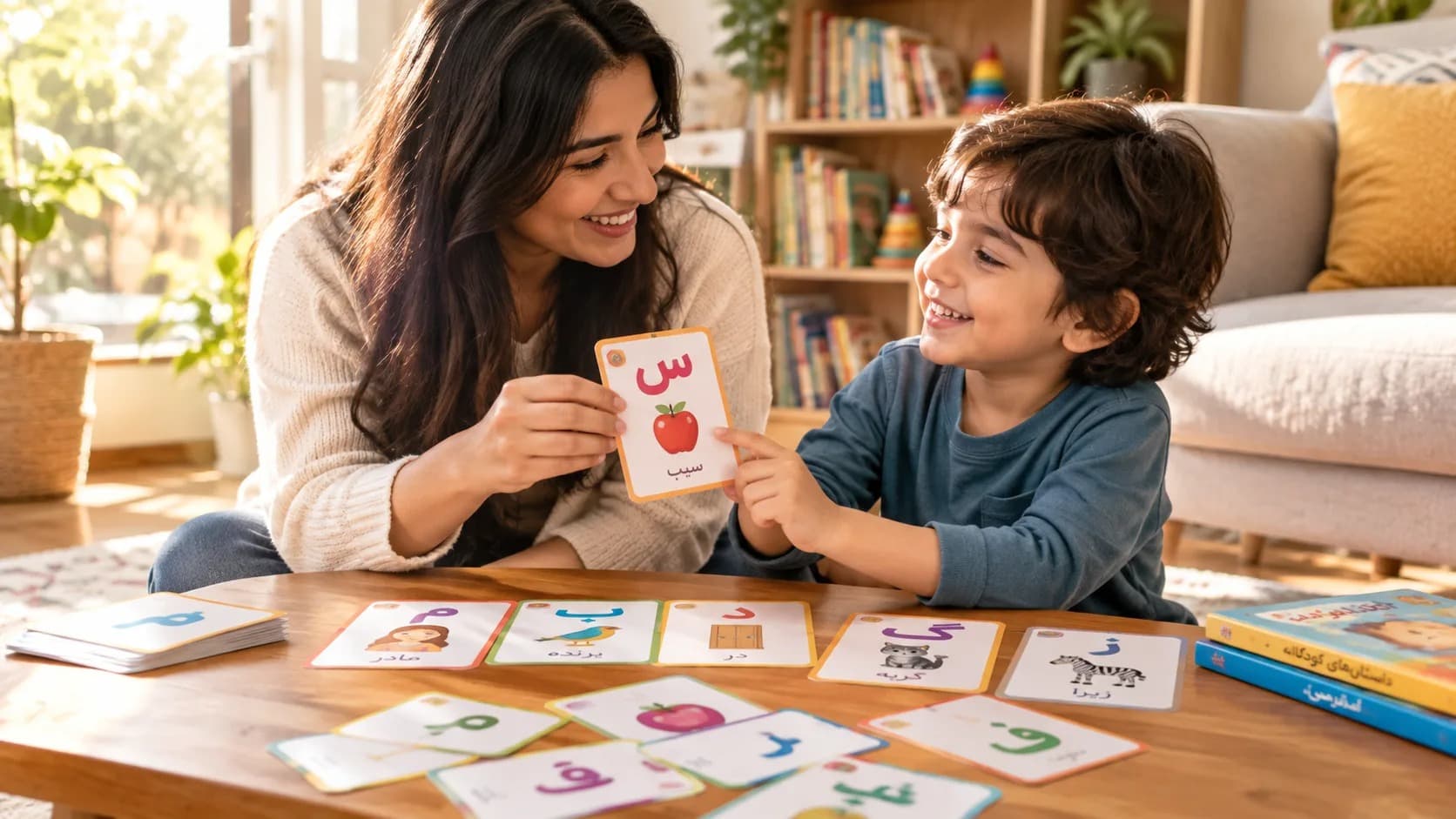
Alphabet Games: Turn learning into a treasure hunt. Hide letter flashcards around the room and have your child find them. Create a simple "Letter Bingo" game or a matching game with pictures of objects that start with each letter (e.g., 'س' for 'سیب').
Storytelling with Letters: Weave letters into personalized stories. Create a character whose name starts with the letter of the day. During story time with Persian children's books, make a game of pointing out specific letters on the page.
Digital Play: In moderation, high-quality educational apps can be a great tool. Look for apps that use games, songs, and interactive stories to teach the Persian alphabet.
2. Multi-Sensory Engagement: Activating All Senses
Learning isn't just a visual activity. Research consistently shows that engaging multiple senses—sight, sound, touch, and movement—dramatically improves memory and retention. For bilingual children, a multi-sensory approach is particularly powerful because it helps distinguish the unique sounds and shapes of Persian letters from the Latin alphabet they encounter daily.
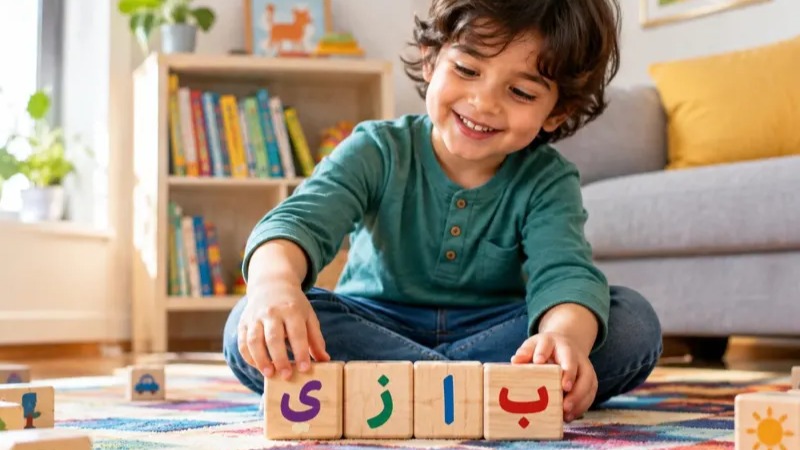
Tactile Learning (Touch): This is where learning becomes truly hands-on. Have your child trace letters in a tray of sand, salt, or even shaving cream. Form letters out of playdough or clay. Create textured letters by gluing sandpaper, fabric, or glitter onto cardboard cutouts for them to feel. These activities build muscle memory and a physical connection to each letter's shape.
Auditory Learning (Sound): Music is a powerful memory aid. Find catchy Persian alphabet songs and sing them together. Clearly enunciate the sound of each letter and turn it into a call-and-response game. This helps your child tune their ear to the specific phonetics of Farsi.
Kinesthetic Learning (Movement): Get the whole body involved! Encourage your child to form letters with their bodies. Play active games like alphabet hopscotch, where they jump to a letter and call out its sound. This is one of the most effective ways to make learning stick because it connects physical action with cognitive learning.
3. Integrating Persian into Daily Life: Organic Exposure
The most powerful language learning happens when it’s woven into the fabric of everyday life. This strategy provides constant, low-pressure exposure that makes Persian a living, breathing part of your child's world.
Label Your Environment: Use sticky notes to label common household items with their Persian names (e.g., 'در' on the door, 'میز' on the table). This technique, known as creating environmental print, is highly recommended by early childhood educators for multilingual learners as it visually connects the written word to the physical object. It’s a simple way to build vocabulary and letter recognition naturally.
Everyday Conversations: Turn errands into language adventures. While at the grocery store, point out products from Persian-speaking regions and try to spot familiar letters on the packaging. Play "I Spy" in the car using Persian letter sounds ("I spy with my little eye, something that starts with 'م'").
Cooking and Crafts: Involve your child in reading a simple Persian recipe. As you cook together, name the ingredients in Persian. During arts and crafts time, encourage them to draw pictures and help them write the Persian name underneath.
4. Consistency and Positive Reinforcement: Building Confidence
Success in language learning is built on two things: consistency and confidence. Creating a positive and encouraging environment is just as important as the methods you use.
Short, Regular Sessions: Aim for 10-15 minutes of focused, fun alphabet activity each day. This is far more effective than a long, draining session once a week. Consistency keeps the information fresh and builds momentum.
Praise Effort, Not Perfection: The goal is to foster a love for the language. Celebrate your child's attempts and persistence. A high-five for trying to trace a difficult letter or a sticker for finishing a game goes a long way.
Follow Your Child's Lead: Pay attention to their interests. If they love cars, incorporate cars into letter learning. If they are tired or frustrated, take a break. Keeping the experience positive ensures they will want to come back to it.
By combining these pillars, you create a rich, supportive, and effective learning ecosystem. For parents looking for structured support, exploring online tutoring can provide personalized guidance. Many platforms offer a free introductory session to see how expert tutors can tailor these methods specifically to your child's learning style.
Learning Persian with the Support of a Qualified Teacher
If you prefer your child to learn the Persian alphabet through a structured program tailored to their age and language level, online Persian classes can be a good option. Darsoon is an online resource for teaching Persian to bilingual children and teenagers, offering classes with Persian-speaking teachers from the comfort of home. Lessons can be adapted to each child’s age, language level, and learning needs, making the learning experience easier and more engaging.
Darsoon also offers a free introductory meeting. This gives your child a chance to meet the teacher, while parents can learn more about the teaching approach and class structure and see whether this type of learning is a good fit for their child.
Frequently Asked Questions (FAQ)
At what age should I start teaching my child the Persian alphabet?
Most experts suggest introducing the alphabet and its sounds around ages 4-6, once a child has a solid foundation of spoken vocabulary. Before that, focus on building a rich oral language environment through speaking, singing, and reading to them in Persian.
My child confuses Persian letters with English letters. What should I do?
This is very common for bilingual children. Use multi-sensory techniques to help them differentiate. For example, have them trace Persian letters in sand while saying their unique sounds. You can also use color-coding—perhaps using a specific color for all your Persian alphabet activities—to create a visual distinction in their minds.
How can I keep my child motivated if they lose interest?
Variety is key. If one game becomes boring, switch to another. Introduce new materials like playdough, alphabet stamps, or a new interactive app. Also, connect the alphabet to their interests. If they love animals, focus on the letters that start the names of their favorite animals in Persian. Keep sessions short and always end on a positive, fun note.
Conclusion
Teaching your bilingual child the Persian alphabet is a beautiful gift that connects them to their roots, their family, and a vibrant culture. The journey doesn't require strict drills or pressure. Instead, the best approach is one filled with joy, play, and discovery. By making learning a multi-sensory game, integrating Persian into the rhythm of your daily life, and offering consistent, positive encouragement, you are not just teaching them to read and write; you are nurturing a lifelong love for the language. Celebrate every small step, be patient with the process, and watch as your child confidently unlocks the door to Persian literacy, one beautiful letter at a time.