
Best Age to Start Piano Lessons for Kids
At what age should your child start piano lessons? This guide covers the best age to start piano, the signs that your child is ready, and the right kind of lessons for every age, from 4-year-olds to teens.
Written by: Mahroo Mahdavi
Number of Views: 41
Reading time: 4 min
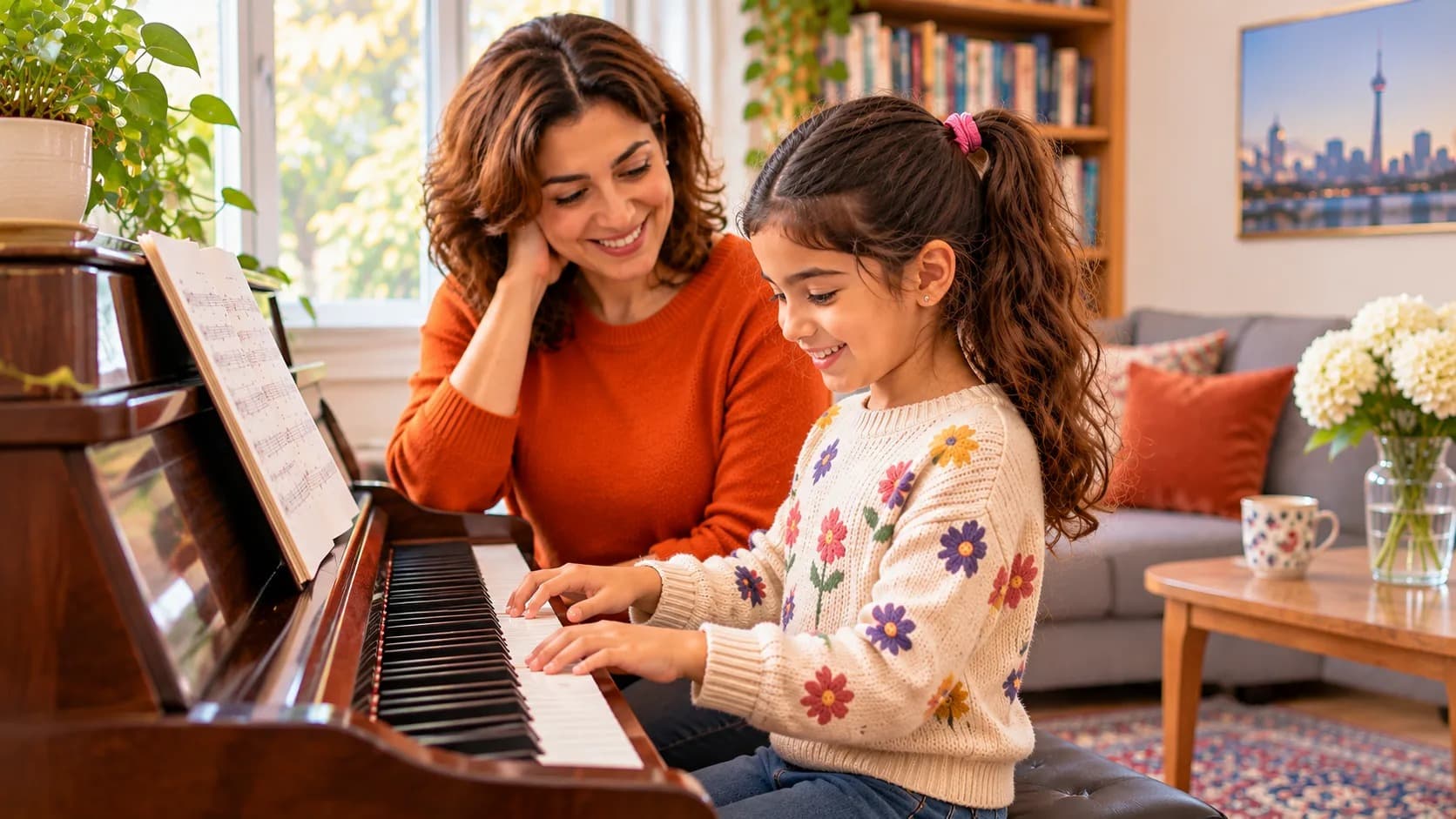
If you're one of those parents who watches your child drift toward a friend's piano or a toy keyboard and wonders, "Is it time?", you're not alone. The short answer: for most kids, the best age to start piano lessons is between 6 and 9. But some children are ready at 4 or 5, and others start at 10 or 12 and progress remarkably fast. Below we'll look at what matters besides age, and how to tell whether your child is ready.
What Is the Best Age to Start Piano?
Most piano teachers consider ages 6 to 9 the ideal window for starting regular lessons. By then, children can usually read and count, focus for 20–30 minutes, and their fingers are strong enough to press the keys comfortably.
Still, age is just a number. Every age has its own right way to learn piano:
3–4: What to expect: Exploring sound, rhythm and playing with the keys · Best lesson format: Play-based music activities, not formal lessons
4–5: What to expect: Learning finger numbers and very simple melodies · Best lesson format: Short 20–30 minute or a bit longer sessions with a parent present
6–9: What to expect: Reading notes, coordinating both hands, short pieces · Best lesson format: Regular weekly lessons of 30–45 minutes
10–12: What to expect: Faster progress, since music theory comes more easily ·
Teens: What to expect: Choosing a style (classical, pop, favorite songs) · Best lesson format: Lessons shaped around the teen's goals and interests
How Can You Tell If Your Child Is Ready for Piano Lessons?
Instead of looking only at their birthday, try checking these signs at home. If your child shows most of them, they're probably ready to start:
They can count to 5 and know their fingers. In piano, each finger has a number, and teachers guide children using those numbers.
They can focus on one activity for 15–20 minutes, such as a puzzle, drawing or building with LEGO.
They recognize letters. Notes are named with letters (A to G) or with do, re, mi and so on.
They can move their fingers independently. For example, tapping the table with each finger separately.
They can follow simple multi-step instructions.
Most importantly, they're interested. A child who runs to the keys with excitement, even if a bit younger, usually gets further than an older child who is pushed into lessons.
If your child doesn't show these signs yet, don't worry. A few months of rhythm games, singing and listening to music at home is the best preparation for a good start.
Is Starting Earlier Always Better?
You've probably heard that Mozart and the famous Chinese pianist Lang Lang began playing piano at around age 3. These stories are inspiring, but they're the exception, not the rule.
Starting early does have real benefits. In one study at MIT, for example, 4- and 5-year-olds who took piano lessons for a few months showed greater improvement in telling apart speech sounds than the other groups. That's interesting news for bilingual families, although it was a small study and shouldn't be stretched into big conclusions.
But starting before a child is ready can backfire. When lessons feel hard and boring, a child may come to associate piano with pressure and quit altogether a few months later.
Another common worry is small hands. For beginner pieces, small hands aren't a problem, and they grow along with the child's skills. In short, the right age is the age at which your child is ready and interested, not the earliest possible age.
Is It Too Late for an Older Child?
No. A child who starts at 10, 12 or even 14 grasps music theory faster, takes practice more seriously, and often makes impressive progress in the first few months. They may just want to get to their favorite songs sooner, and a good teacher uses that interest to build motivation.
Do Online Piano Lessons Work for Young Kids?
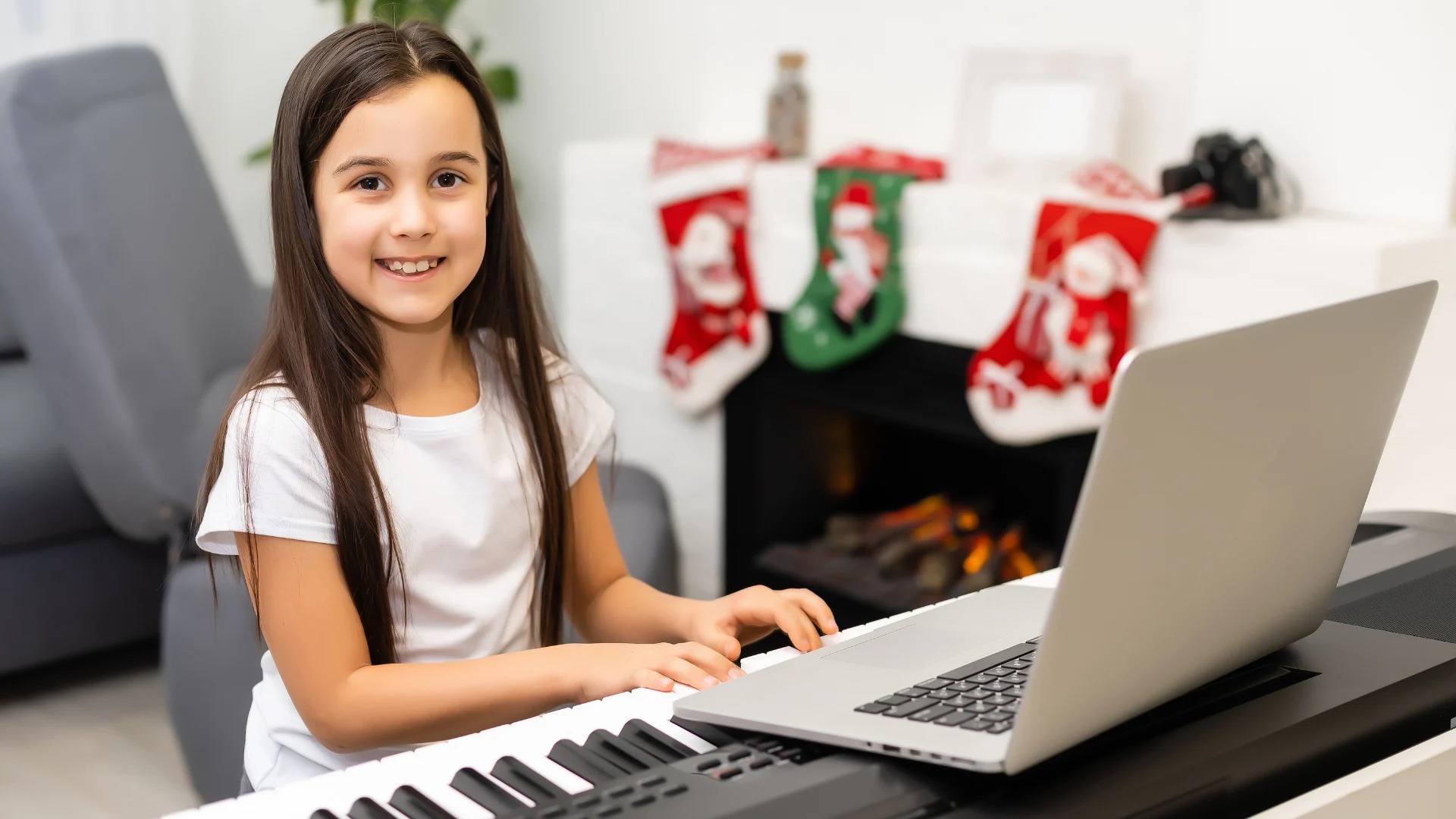
Many Iranian families in Canada and the US juggle school, extracurriculars and driving kids around, so online lessons are often the more practical option. A common question is whether a 5- or 6-year-old can really learn piano online. The answer is yes, as long as:
Sessions are short; 30 minutes is enough for children under 7.
A parent sits with the child, at least for the first few lessons.
The camera is placed so the teacher can clearly see the hands and the keys.
The teacher has experience with young children and keeps the lesson playful and encouraging.
For immigrant families there's one more advantage: a Persian-speaking teacher. Your child can speak whichever language feels easier, and you can talk with the teacher about progress and practice without any language barrier. With Darsoon's online piano lessons you can find a Persian-speaking piano teacher who fits your child's age, level and schedule. And if you're not sure what makes a good teacher, our article on what makes the best piano teacher for kids can help.
Piano or Keyboard: What Should You Buy to Start?
You don't need an expensive acoustic piano to begin. A digital piano or a keyboard with full-size keys is enough. If your budget allows, choose a model with 88 weighted keys; it feels like a real piano and builds finger strength properly. A 61-key keyboard works for a young child's first year, but usually needs an upgrade after a year or two.
FAQ: Age to Start Piano Lessons
Can a 4-year-old learn piano?
Yes, if lessons are short, play-based and a parent is present. At this age the goal is getting to know music and enjoying it, not serious note reading.
How long should a child practice piano each day?
For children aged 5 to 7, 10–15 minutes a day is enough, gradually growing to 20–30 minutes for older kids. Short daily practice works better than long, irregular sessions.
Should piano be my child's first instrument?
Piano is a great first instrument: a simple press of a key makes a sound, and the child can see every note right in front of them. What they learn on piano carries over to other instruments later on.
Conclusion
For most children, the best age to start piano is between 6 and 9, but readiness and interest matter more than the number itself. A 4-year-old in a play-based class and a 12-year-old with a focused plan can both have a great experience with piano.
If you're not sure whether your child is ready, meeting a piano teacher is the best way to find out. At Darsoon, the intro meeting is free: the teacher gets to know your child, sees how ready they are, and tells you where to begin. To browse teachers and request a free intro meeting, visit Darsoon's online piano tutors.

