
My Child Understands Persian but Answers in English: Why and What to Do
Many Iranian parents in Canada and the US speak Persian to their kids, and the kids understand every word, yet they answer in English. Here is why it happens and the practical steps that help a bilingual child start speaking Persian again.
Written by: Mahroo Mahdavi
Number of Views: 71
Reading time: 4 min

"Maman, I'm hungry!"
If that sounds familiar, you're not alone. The good news: this is very common, and it can be turned around.
It Has a Name: Passive Bilingualism
A child who understands a language but rarely speaks it is called a "passive" or "receptive" bilingual. It's an extremely common pattern in immigrant families.
The key point is that understanding Persian means the foundation is already there. Your child has the words and sentence patterns in their head; they just don't yet have enough reason or confidence to use them. So you're not starting from zero, you're starting well ahead.
Why Do Kids Answer in English?
English gets most of their day
School, friends, sports, YouTube and video games all happen in English. Persian is often heard only a few hours a day, at home. It's natural for a child to feel more comfortable in the language they live in most.
They know you understand English
If your child speaks English and you answer as usual, nothing changes from their point of view. The brain simply takes the easier route.
Speaking Persian is harder for them
Understanding is always easier than speaking. When a child gets stuck for a word mid-sentence, they quickly switch to English.
Siblings speak English to each other
The first child usually hears more Persian. Once they start school, English moves into games at home, and younger siblings follow along.
They don't want to be different
Especially at school age, kids want to fit in with their classmates. Sometimes they're also embarrassed about making mistakes or about adults laughing at their accent.
What Usually Backfires
When we're worried, it's easy to push harder. But these habits tend to turn Persian into an unpleasant obligation:
Scolding or punishment: "No ice cream until you say it in Farsi."
Constant correcting: the child learns that speaking Persian means making mistakes.
Comparing: "Look how well your cousin speaks Persian."
Testing them in front of guests: "Tell everyone what this is called in Farsi."
The goal is for Persian to feel good, not for your child to speak it out of fear.
Practical Ways to Encourage Your Child to Speak Persian
1. Create a real need
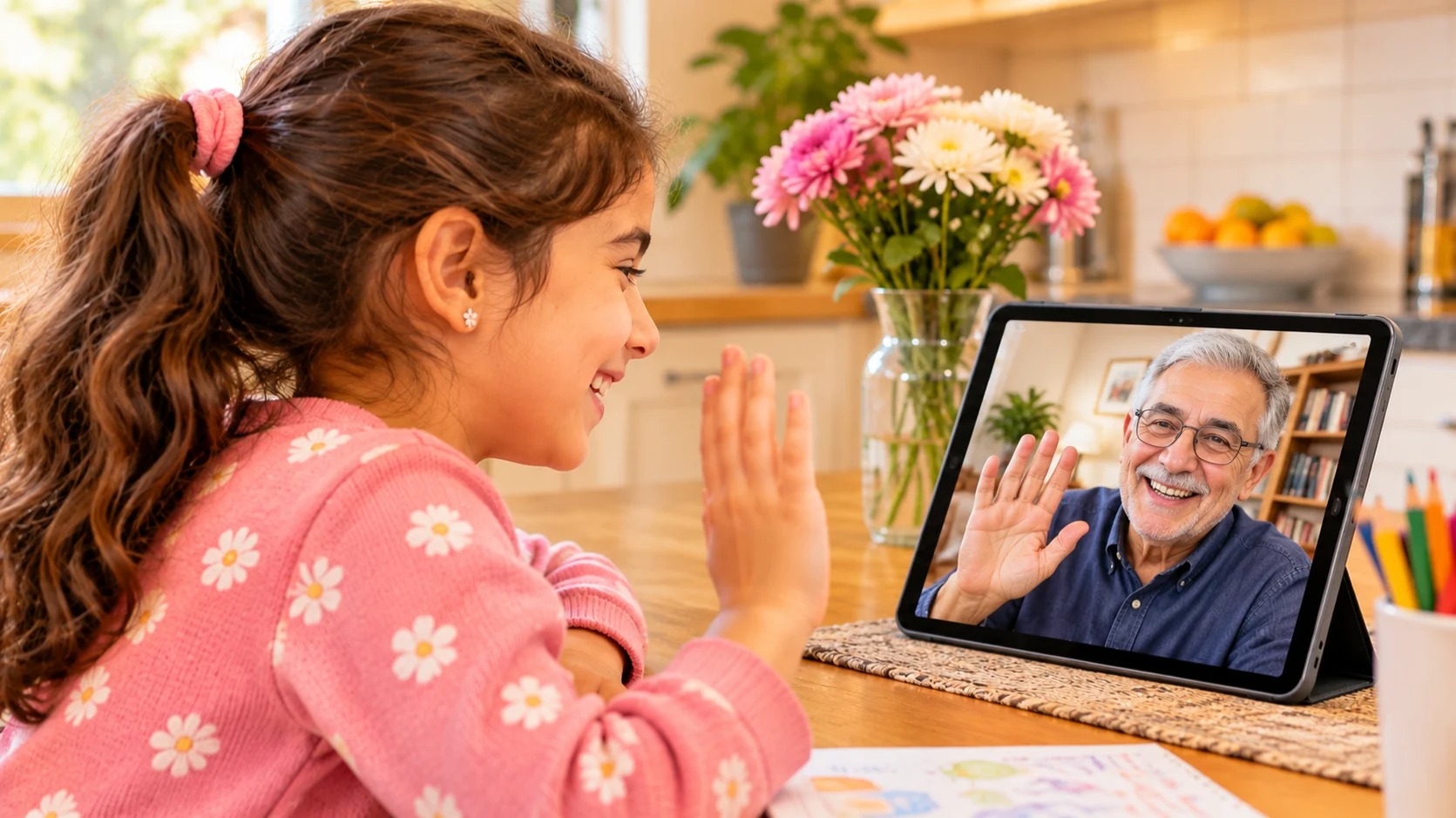
Kids speak Persian when they have to. Regular video calls with grandparents who don't speak English, get-togethers with Iranian families and trips to Iran are all situations where English simply doesn't work.
2. Repeat their sentence in Persian
When they ask "Can I have juice?", smile and ask "Ābmive mikhāy?" ("You want juice?"), then wait for them to repeat it. Without any argument, this puts the right words in their mouth.
3. Set a time and place for Persian
For example, Persian only at dinner, in the car or on weekends. A clear, playful rule works better than constant pleading.
4. Tie Persian to fun things
Bedtime stories, word games, cooking together, children's songs and rhymes. Your child should see Persian as the language of good times, not the language of reminders.
5. Praise every attempt
Even a sentence that's half English is a step forward. Respond to what they're saying, not to their grammar.
6. Stay consistent yourself
If parents speak English to each other all the time, kids get the message. Persian needs to be the natural language of the home.
Strategies by Age
Each age has its own challenge, and the approach should match it:
3 to 6: Main challenge: Daycare starts and English arrives fast · What works: Stories, rhymes, pretend play, and repeating their sentences in Persian
7 to 10: Main challenge: School and English-speaking friends · What works: Playful rules, calls with family, a conversation-focused class
11 to 15: Main challenge: Identity, embarrassment and independence · What works: Persian through their own interests (soccer, music, movies), respecting their choices, a teacher outside the family
Why a Persian-Speaking Teacher Sometimes Helps More
Sometimes the problem is that Persian has become "Mom and Dad's language", tied to nagging and reminders. A Persian-speaking teacher breaks that cycle:
With someone new, kids naturally speak Persian, without family tension.
The class can focus on conversation and confidence, not just the alphabet and writing.
Lesson topics are chosen around the child's interests.
You get to step out of the role of "language police".
For families in Canada and the US, online classes have another advantage: you can schedule them after school or on weekends. If you later want to add reading and writing, our guide to teaching the Persian alphabet to bilingual children can help.
Common Questions from Parents
My child is 10. Is it too late?
No. When a child already understands Persian, the path to speaking is shorter than you might think. You just need to lean more on their own interests and motivation.
Will Persian hurt their English at school?
No. Being bilingual doesn't hold back the school language. Children of immigrants usually learn English well; Persian is the language at risk.
Should I refuse to answer when they speak English?
Ignoring them completely can make kids upset and stubborn. It's better to always answer in Persian yourself and gently repeat their sentence in Persian.
One of us doesn't speak Persian. Can it still work?
Yes. The Persian-speaking parent should stick to Persian consistently, and you can add other sources such as relatives, books and a teacher, so Persian doesn't depend on just one person.
Conclusion
If your child understands Persian but answers in English, you haven't failed. The foundation is built; now it's about creating a reason, opportunities and good feelings around speaking. Start with one or two of these strategies, be patient, skip the pressure, and add more over time.
If you'd like to see how a Persian teacher can get your child talking, Darsoon's online Farsi classes let you find a teacher who fits your child's age and level, starting with a free intro meeting to see whether it's the right fit.
