
Essential Piano Techniques Every Beginner Must know
Discover the foundational piano techniques that go beyond just playing notes, helping you build a lifetime of expressive, confident, and effortless musical playing.
Written by: Mahroo Mahdavi
Number of Views: 215
Reading time: 8 min
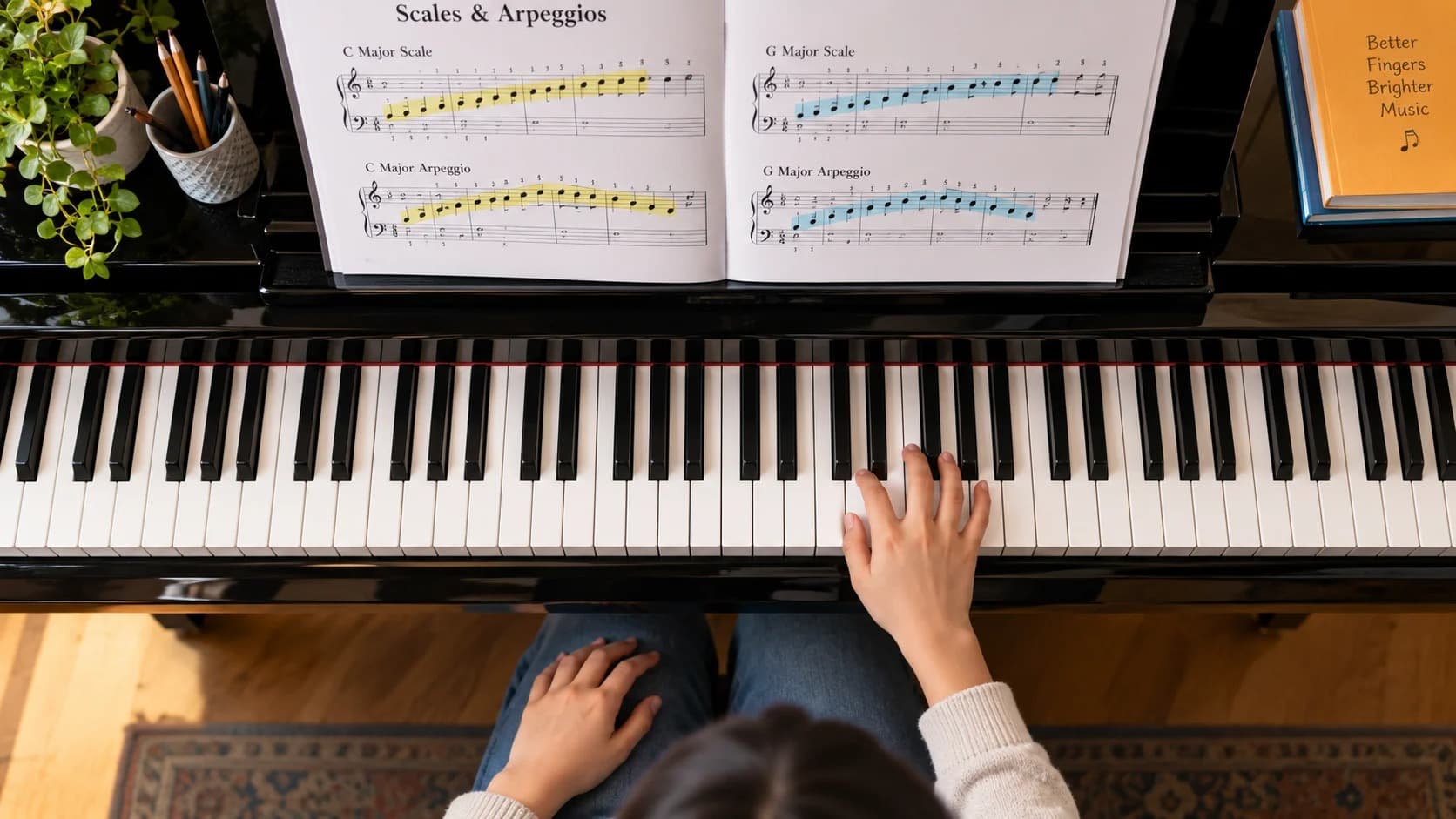
Introduction: Building Your Piano Foundation for a Lifetime of Music
Many aspiring pianists believe that learning to play is simply a matter of hitting the right keys in the right order. This is the myth of "just playing notes." While accuracy is important, true piano mastery—the kind that allows for genuine musical expression—is built on a much deeper foundation of technique. This isn't about boring, repetitive finger exercises for their own sake; it's about understanding the mechanics of your body and the instrument to produce beautiful, controlled, and effortless sound. These foundational skills are what separate mechanical playing from truly making music.
This article moves beyond the obvious advice to uncover the essential, often overlooked, techniques that will transform your journey. We'll explore how your body is an extension of the instrument, how to unlock a universe of sound through touch, and how to practice smarter, not just harder. Consider this your blueprint for success, a guide to building a solid foundation that will support a lifetime of musical enjoyment and growth. From posture to pedaling, and from finger agility to the art of listening, these pillars will empower you to play with confidence, grace, and heartfelt expression. This journey is about transforming your passion for music into a tangible skill, a true form of art that you can share and cherish.
Key Takeaways
Proper posture and hand alignment prevent injury and unlock your full dynamic range.
Mastering different touches, like legato and staccato, is key to expressive playing.
Technical drills should be practiced with musical purpose, not just for speed.
The metronome is a vital tool for developing a steady internal pulse.
Pedaling should be used as an artistic tool to add color, not to cover up mistakes.
Active listening and recording yourself are essential for self-correction and growth.
1. The Power of Posture and Hand Position: Your Body as an Extension of the Instrument
Before a single note is played, your success at the piano begins with how you approach it physically. Proper posture is far more than just "sitting up straight"; it's about creating an aligned, relaxed, and efficient system that prevents injury and unlocks your full dynamic range. Tension is the enemy of fluid playing. Start by ensuring your shoulders are down and relaxed, allowing your arms to move freely from the back, not just the elbow. This freedom of movement is critical for generating power and control without strain.
Your hands should adopt a "natural curve," as if you were gently holding a ball. This shape provides inherent strength and agility, allowing your fingers to strike the keys with precision. Avoid flat or collapsed fingers, which lead to a weak tone and lack of control. Equally important is your wrist alignment. Your wrist should be a flexible bridge between your arm and hand, neither rigidly high nor collapsed below the key level. A common pitfall is a tense or bent wrist, which restricts blood flow, causes fatigue, and results in a harsh, percussive tone. The non-obvious connection here is profound: your physical setup directly dictates your musicality. A relaxed, aligned body allows you to use your natural arm weight to create a rich, resonant tone, turning a physical act into an expressive art form.
2. Mastering the Touch: Unlocking Dynamic and Articulation Secrets
The piano is a uniquely expressive instrument, capable of a vast spectrum of sound beyond simply loud and soft. Mastering the art of "touch" is how you unlock this potential. Two of the most fundamental yet nuanced articulations are legato and staccato.
Legato: The Art of Seamless Connection. True legato is about creating a smooth, singing line where notes connect seamlessly without any perceptible gap. The secret isn't just finger strength, but the controlled use of arm weight. Imagine your arm as a source of energy, transferring weight from one finger to the next in a fluid motion. A key technique is to hold the first note until the very moment the next note is played, creating a subtle, beautiful overlap of sound that mimics the human voice.
Staccato: Precision and Lightness. Staccato involves playing notes in a detached, crisp manner. However, there are different ways to achieve this. Wrist staccato, a quick, light flick of the wrist, is perfect for delicate, bouncy passages. Arm staccato, which involves a slight drop and rebound of the entire forearm, can produce a more emphatic and weighty detached note. The key to both is the "rebound" effect—thinking of the key as a mini-trampoline and letting your finger spring off it immediately.
Developing a varied palette of touch requires conscious practice. Try playing a simple five-note scale, starting as quietly as possible (pianissimo) and gradually getting louder (crescendo) to the loudest you can control (fortissimo), then back down. This exercise trains your muscles and your ear to recognize and produce the subtle gradations that make music breathe and come alive.
3. Finger Independence and Strength: Smart Practice for Agile Hands
Technical exercises like scales, arpeggios, and drills from books by Hanon or Czerny are staples of piano education, but their true value is lost in mindless repetition. The goal is not just speed; it's musical growth. When practicing, every repetition should have a purpose.
Scales are your musical vocabulary. Instead of racing through them, prioritize achieving a perfectly even tone and volume for every single note. This builds incredible control. Connect the scales to their key signatures, understanding the theoretical framework of the music you play. To build control and break the monotony, practice them with different rhythms, such as dotted rhythms or triplets. Arpeggios teach you to navigate chords with grace. The biggest challenge is the thumb-crossing motion. Practice this slowly and deliberately, ensuring the movement is smooth and your hand doesn't jerk. This fluidity is essential for playing music built on broken chords. Always remember to connect the arpeggios you practice to the chords they represent, seeing the bigger musical picture.
When approaching drills from method books, avoid the "robot syndrome." Identify *why* you are doing a specific exercise. Is it for finger independence? Wrist flexibility? Evenness? By having a clear goal, you can bring musicality even to the most mechanical-sounding drills. This approach to foundational techniques helps develop not just strong fingers, but also a healthy and musical playing habit from the very beginning, as emphasized by modern pedagogy found in resources like the Pianodao blog.
4. Rhythmic Precision and Internal Pulse: The Metronome as Your Ally
For many students, the metronome feels less like a helpful tool and more like a harsh critic, relentlessly pointing out every rhythmic flaw. It's time to reframe this relationship. Befriending the metronome is one of the most important steps you can take toward becoming a solid, reliable musician. Its purpose is not to judge you, but to help you develop an unwavering internal clock.
A steady pulse is the backbone of music. When you can play perfectly in time with a metronome, you gain the freedom to be musically expressive *without* losing the rhythmic integrity of the piece. One of the best ways to internalize complex rhythms is to practice subdividing. If you're struggling with a passage, set the metronome to click on the eighth notes instead of the quarter notes. Hearing the smaller beats helps you place each note with surgical precision. This strong rhythmic foundation is not just for solo playing; it's absolutely essential for playing with other musicians. A reliable sense of time is what allows a group of performers to sound like a cohesive, unified ensemble.
5. Pedaling Techniques: The Soul and Resonance of the Piano
The pedals are often called the "soul of the piano," yet many beginners use them as a crutch to blur mistakes. Proper pedaling is a sophisticated art that adds resonance, color, and depth to your music.
The Sustain Pedal: This is more than just an on/off switch for blurring notes. The most crucial skill is learning to "change" the pedal precisely. The pedal should be released and re-pressed *exactly* when the harmony changes. This is done by lifting your foot as you play the new chord and immediately depressing it again, creating a clean transition without muddiness or gaps. Advanced techniques like half-pedaling (depressing the pedal only partway) can create subtle resonance without a full blur.
The Una Corda (Soft) Pedal: On a grand piano, this pedal shifts the entire keyboard, causing the hammers to strike fewer strings. Its effect is not just about making the music quieter; it creates a distinct change in tonal color, often resulting in a more muted, intimate, or ethereal sound.
The Sostenuto Pedal: This middle pedal, found on many grand pianos, is often misunderstood. It sustains *only* the notes that are held down at the moment the pedal is pressed, allowing you to hold a bass note or chord while playing other notes cleanly over it.
Think of the pedals as an expressive tool, just like dynamics and articulation. Experiment with them, listen carefully to the effects they create, and integrate them thoughtfully into your musical interpretation.
6. Active Listening and Self-Correction: Becoming Your Own Best Teacher
One of the most powerful skills you can develop is the ability to listen critically to your own playing. This means cultivating an "inner ear"—the ability to hear the music in your head, with all its nuances, before you even touch the keys. This internal musical model becomes your guide and your standard.
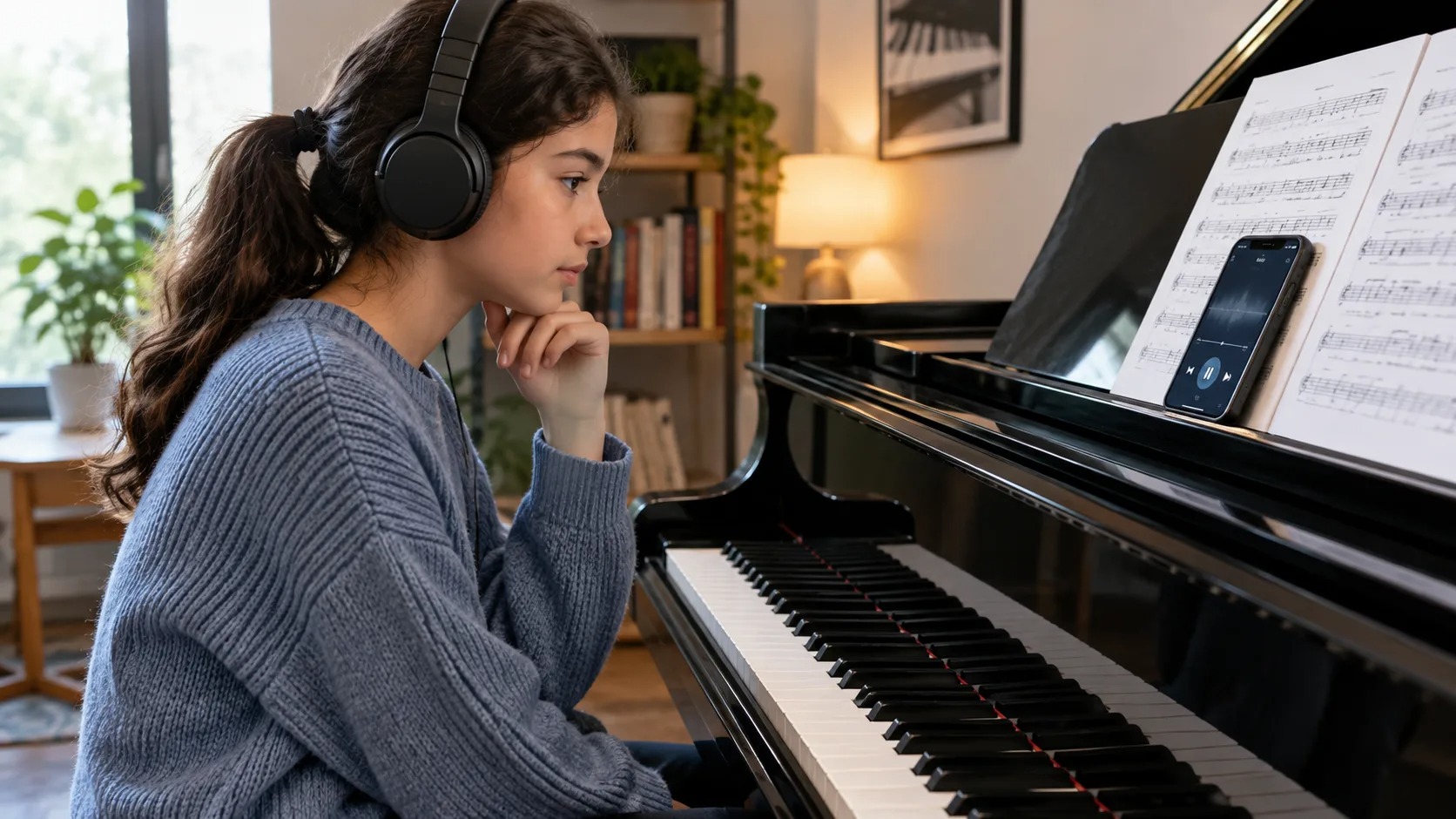
A fantastic tool for developing this skill is to record yourself. A phone recording provides an unbiased mirror, revealing issues with rhythm, dynamics, and tone that you might not notice while in the act of playing. It can be humbling, but it's an incredibly effective way to pinpoint specific areas for improvement and, just as importantly, to track your progress over time and hear how far you've come. The art of deliberate practice is rooted in this active listening. With every note you play, ask yourself: Is the tone beautiful? Is the rhythm accurate? Is the phrasing musical?
7. Efficient Practice Strategies: Maximizing Your Time at the Keys
The quality of your practice time is far more important than the quantity. Mindlessly playing through pieces from beginning to end for an hour is one of the least effective ways to improve. Instead, adopt strategies for efficient, goal-oriented practice.
First, learn to break down the beast. When you encounter a difficult passage, isolate it. Work on just those two or three measures. This focused approach of tackling challenges in small, manageable chunks is far more effective than repeatedly stumbling through them in the context of the whole piece. Second, embrace slow practice. Speed is a byproduct of accuracy and control, not the other way around. Playing a passage slowly and perfectly trains your brain and muscles correctly. Rushing only reinforces mistakes. Third, ensure every repetition is mindful, not mindless. Before you repeat a section, know *why* you are repeating it. Are you focusing on evening out the rhythm? Shaping a dynamic curve? Securing a fingering? This transforms drills into problem-solving.
Finally, set clear objectives for every session. As noted by pianists who have restarted their journey, having goal-oriented sessions is crucial for progress. Your goal might be to master four measures of a new piece or to play a scale perfectly evenly at a specific tempo. Treating each practice session as a special occasion enhances focus and helps you get the most out of your time at the keys. Don't underestimate the power of mental practice, either. Away from the piano, you can study the score, visualize the movements, and hear the music in your head. This mental work solidifies your understanding and makes your time at the keys even more productive.
Frequently Asked Questions (FAQ)
What is the most important piano technique for beginners?
Proper posture and hand position are the most critical starting points. Without a relaxed, aligned body, developing advanced techniques like legato, staccato, or fast scales becomes difficult and can lead to physical strain.
How often should I practice scales and arpeggios?
It is best to practice them daily for 10 to 15 minutes as part of your warm-up routine. Focus on evenness of tone and rhythm rather than speed to build solid muscle memory.
How do I stop my wrists from getting tense while playing?
Ensure your bench is at the correct height so your forearms are parallel to the floor. Keep your shoulders relaxed and practice dropping your arm weight into the keys rather than pressing down with finger tension alone.
If you're ready to begin this transformative journey, Darsoon piano tutors are here to guide you every step of the way to find the perfect mentor for your musical goals.
Also, you can read Darsoon's guide for finding the best piano teacher.
Conclusion: Your Journey to Confident and Expressive Piano Playing
Mastering the piano is a journey of connecting dozens of small, fundamental skills until they become second nature. The techniques discussed here—from posture and touch to pedaling and efficient practice—are not isolated tricks. They are deeply interconnected, each one supporting and enhancing the others. A relaxed posture enables a nuanced touch; finger independence allows for clear articulation; a steady internal pulse makes expressive pedaling possible.
Embrace the process. True musicality is a marathon, not a sprint. Be patient and consistent, and celebrate the small victories along the way. The ultimate goal is to move beyond the notes on the page and unlock the joy of expressing yourself through the magnificent sound of the piano. By applying these techniques with mindful, purposeful practice, you are not just learning to play an instrument; you are learning a new language for your emotions.